Some earphones try to win with raw excitement. Others chase reference tuning so hard that they forget to sound engaging. The Aful Performer 8S stands out because it seems to aim for a more delicate balance between those two extremes. What grabs me first is not a single frequency trick or a flashy promise about detail. It is the sense that this is trying to be a mature, carefully layered tuning with a spacious presentation, controlled bass, and a treble response that wants to sound open rather than merely sharp.
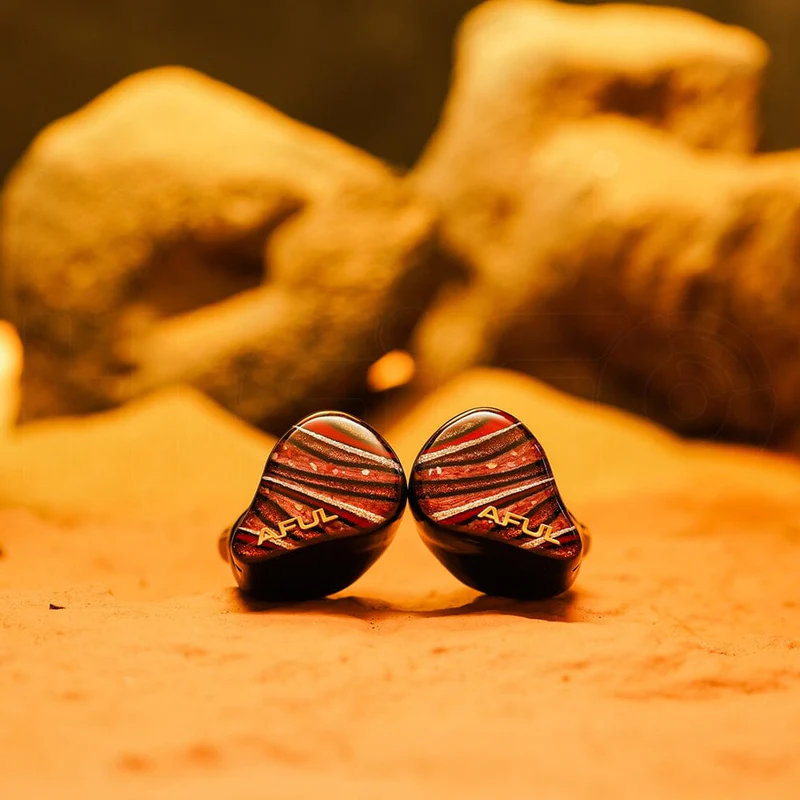
Aful Performer 8S
On paper, the hybrid concept is already ambitious. The Performer 8S uses a quadbrid-style configuration with one passive radiator, one dynamic driver, six balanced armatures, and one micro planar driver, which immediately tells me this is not meant to be a simple refresh. It is clearly positioned as a more technical and more premium evolution of the Performer line, and that comes with certain expectations. I expect better layering, better composure, and a stronger sense of refinement than I would from the usual mid-tier set trying to impress in five minutes.
To my ears, the core appeal here is the way it seems to blend musicality with separation. I do not hear it as a cold studio tool, and I do not hear it as a bass-first crowd pleaser either. Instead, it lands in that interesting space where the bass stays disciplined, the mids remain clean and natural, and the upper end adds a lot of openness. That last part is also where the biggest caveat lives. Opinions differ, and I can understand why. The upper range seems to be the feature that makes the Performer 8S memorable, but it is also the part most likely to decide whether this becomes a favorite or a near miss.
Unboxing and First Impressions
The unboxing experience looks like it belongs in the price range. I get the sense of a product that was meant to feel polished before a single note is played. Presentation matters more with higher priced IEMs because it sets the tone for how complete the package feels, and the Performer 8S seems to understand that well. Nothing about it suggests bargain-bin corners were cut at the last minute.
The included accessories appear solid rather than extravagant. That is mostly a good thing. I would rather see a thoughtful package with usable extras than a pile of filler, and the Performer 8S mostly leans in that direction. The case seems well made, with a leather-like texture and a clean, professional finish. It does not sound especially inventive, but it does sound practical and premium enough to match the product itself.
The cable also comes across as one of the stronger parts of the bundle. I like that it seems flexible instead of overly thick and stiff. A good stock cable should feel easy to live with, not like something I want to replace on day one, and this one sounds better judged than many of the bulky alternatives that show up in similarly priced sets. The brown finish and metal hardware help it feel more upscale without going overboard.
I do think the bundle stops short of being truly excellent. A modular cable would have helped at this level, and more tip variety would have made the package feel more complete. So while I come away with a positive impression, I would not call the unboxing a knockout. It feels professional, attractive, and sensible, but not unusually generous.
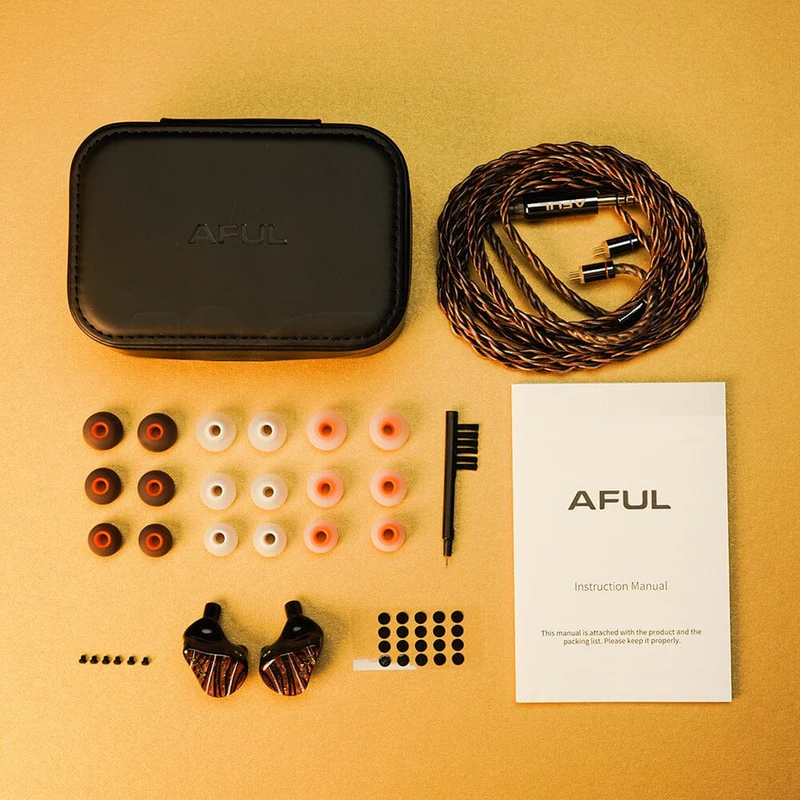
Aful Performer 8S Accessories
Build Quality and Design
The Performer 8S seems to make a strong first impression with its faceplates. The design language sounds elegant and distinctive without falling into the trap of looking loud for the sake of it. I like when a product has visual personality but still feels mature, and this appears to land on the right side of that line. The faceplates seem to be one of the easiest things to admire here.
Build choices also look well judged from a practical point of view. The 2-pin connection is non-recessed, which is a small but welcome decision because it keeps cable compatibility simple. I always appreciate that on an IEM in this segment. It removes unnecessary friction for anyone who likes swapping cables or already has preferred options on hand.
Comfort is more nuanced. The shells appear to be on the larger side, but the shape seems ergonomic enough to allow a secure and fairly deep fit. That deep insertion looks like a major part of the overall design philosophy. It helps with isolation and stability, and it likely contributes to the sense of focused staging and control. At around 6 grams per side, the shells also seem relatively light considering the driver count, which should help with longer sessions.
The nozzle design is one of the more important details. It is roughly 5.5 mm in width and length, which supports that deeper fit, but the lack of a retaining lip means tip choice matters more than usual. Some eartips may slip off too easily, so this does not sound like the most forgiving setup in the world. That is not a dealbreaker, but it is something I would keep in mind.
The deeper fit itself will not be for everyone. I can easily see some listeners loving the isolation and locked-in feel, while others may prefer a shallower, more relaxed insertion.
Sound Quality
The big picture is quite appealing. I hear the Performer 8S as a warm-neutral to slight U-shaped tuning with a clean, spacious presentation and an emphasis on separation, air, and composure. It does not seem to chase bombast. Instead, it tries to sound organized, immersive, and refined. That works in its favor, especially when the mix is dense and I want instruments to stay distinct from one another.
Bass
The bass seems one of the more interesting parts of the tuning because it avoids the usual trap of sounding either too lean or too bloated. I hear it as a mellow take on neutral bass with more depth and rumble than the phrase neutral bass usually implies. There seems to be a real sub-bass foundation here, and that physicality helps the Performer 8S avoid sounding sterile.
At the same time, this is not a basshead set. Mid-bass warmth appears restrained enough to keep the lower mids clean, and that gives the overall presentation a more polished and disciplined feel. For acoustic, jazz, vocal music, and cleaner electronic tracks, that balance sounds quite attractive. The downside is obvious. Some listeners will want more slam and more outright weight, especially for genres that depend on punch and density. Opinions differ on that point, and I can understand both sides. I hear the bass as tasteful rather than thrilling.
Midrange
The midrange seems to follow that same philosophy. I hear it as clear, natural, and slightly relaxed rather than vividly pushed forward. Vocals appear to have good presence in the stage, but not the kind of upper-mid intensity that forces them to the center of attention. That is probably why some people hear the tuning as smooth and well judged, while others feel it could use more energy.
To my ears, that relaxed upper-mid approach is a big part of the Performer 8S identity. It keeps the sound from becoming shouty, and it helps preserve a sense of ease even when the treble is active. Male vocals seem to benefit from the clean low-end transition, while female vocals likely sound present but not aggressively sharpened. If I wanted a more forward pinna gain rise, this would not be the tuning I would chase. But if I wanted a slightly laid-back, natural midrange that avoids glare, this starts to make a lot of sense.
Treble
Treble is where the Performer 8S becomes either compelling or complicated. On the positive side, I hear a lot to admire. The lower treble seems well controlled, bright without turning obviously harsh, and airy enough to create a strong sense of openness. Cymbals and upper harmonics appear lively, extended, and cleanly placed. That helps the whole presentation feel separated and spacious.
The problem is the micro planar implementation seems to introduce a planar sheen that not everyone will tolerate the same way. This is the part that keeps coming back in my mind. Some listeners may hear it as added brilliance and clarity. Others may hear a metallic edge or a slightly artificial reverb-like character on vocals and cymbals. I do not think that concern can be dismissed because it sounds central to how this set behaves.
That means treble-sensitive listeners should be cautious. I can see this being manageable with tip rolling or filter changes, and there are hints that accessories can tame it. Still, I would not frame the Performer 8S as safely smooth. I would frame it as carefully tuned but still capable of becoming fatiguing over longer sessions if that planar sheen happens to hit the wrong nerve.
Technical Performance
Technically, the Performer 8S seems strong and quite distinctive in presentation. The standout trait looks to be its soundstage structure. Rather than projecting massively outside the head, it seems to build depth and spacing inside the stage itself. That can make the listening experience feel immersive and well layered, even if it may not register as huge in the usual exaggerated sense.
Separation appears to be one of its clearest strengths. Instruments seem to keep their own space well, aided by the airy top end and disciplined low end. Imaging also sounds solid, though not everybody agrees on how far the technical edge really goes. Opinions differ here, and I think the fairest takeaway is that the Performer 8S is clearly competent, but perhaps not the absolute last word in raw detail for the price.
I hear it as more musical than hyper-analytical. It seems capable of pulling plenty of information from a mix, but it is the presentation of that information that matters most. The Performer 8S sounds like a technically adept IEM that values structure, immersion, and cleanliness over sheer aggressive microdetail.
How It Compares
The comparison that stands out most is against the Hidizs MP145 Pro, and it helps clarify what the Performer 8S is trying to do. The MP145 Pro appears to offer a stronger upper-end performance in one specific sense: it delivers air without the same planar sheen problem. That matters because the Performer 8S lives or dies by how well its treble is received.
Where the Performer 8S seems to answer back is in overall refinement of presentation. I hear it as the more deliberate and polished tuning, especially in the way it balances bass restraint, midrange naturalness, and stage organization. It does not sound like it wants to overwhelm with spectacle. It wants to sound composed. That can make it the more attractive option for listeners who value maturity and coherence over immediate excitement.
There is also an implied comparison to the older Performer 8 lineage, and that is important because the 8S seems to chase a slightly more ambitious identity rather than merely repeating the formula. The spatial presentation appears to be a major part of that step forward. I can also see why some listeners frame it as a kind of spiritual successor to sets known for immersive staging and a pleasing balance between musicality and technical competence.
In practical terms, I would say the Performer 8S makes the most sense when compared with alternatives that either lean brighter and more technical or warmer and more bassy. It sits between those camps. That middle position is appealing, but it also means the treble character becomes the deciding factor more than anything else.
Is It Right for You?
The Performer 8S makes the most sense for someone who wants a refined, spacious, slightly warm-neutral IEM with strong separation and a clean overall balance. I would point it toward listeners who care about staging, layering, and vocal clarity more than raw bass impact. It seems especially well suited to genres where openness and instrument placement matter, such as acoustic music, jazz, cleaner rock, singer-songwriter material, and a lot of well-mastered pop or electronic music.
I also think it fits people who enjoy a deeper, more locked-in fit and strong passive isolation. For commuting or longer focused sessions, that could be a real strength. The lightweight shells help the case further, even if the overall size and insertion depth will not suit everybody equally.
Who should skip it? Anyone who is highly sensitive to treble texture should be careful. The Performer 8S does not sound brutally sharp, but the planar sheen issue seems real enough that I would not treat it as a small footnote. Likewise, if you want a heavily forward upper-mid vocal presentation or a more visceral bass shelf for modern pop, EDM, or hip-hop, this may come across as too controlled.
So the ideal listener is someone who values polish, space, and tonal discipline, and who is willing to accept a bit of character up top in exchange for that airy, immersive presentation.
Final Verdict
The Aful Performer 8S strikes me as a smart, attractive, and clearly purposeful IEM. Its strongest qualities seem to be its sense of space, its disciplined but satisfying bass, its natural midrange balance, and the polished way it organizes a mix. When those traits line up with my preferences, it comes across as a very convincing upper-mid-tier tuning with real personality.
It is not a universal recommendation, though. The treble is the deciding factor. I can easily imagine one listener praising its openness and clean extension while another taps out because of the planar sheen. That disagreement feels built into the product. In a way, that is the whole story of the Performer 8S.
My final take is positive. I hear the Performer 8S as a refined specialist rather than a crowd pleaser. For the right listener, it offers an immersive and elegant presentation that feels more mature than flashy. For the wrong listener, the top end may never fully disappear. If the tuning profile sounds like your kind of balance, it looks like a very strong contender.
Where to Buy
You can find the Aful Performer 8S on:
Affiliate Disclaimer: Listen Vibes may earn commissions from qualifying purchases that helps to maintain the website - at no extra cost to you.