There are times when a product comes along that does not look like much at first glance but manages to deliver more than expected once you start using it. The Fiio BTR11 is one of those products for me. It is a tiny portable Bluetooth amplifier and receiver that costs around twenty dollars, yet it manages to combine surprising sound quality, practical features, and a level of convenience that I did not anticipate. After weeks of using it in different scenarios, I can confidently share my experience.
Fiio BTR11
First Impressions and Unboxing
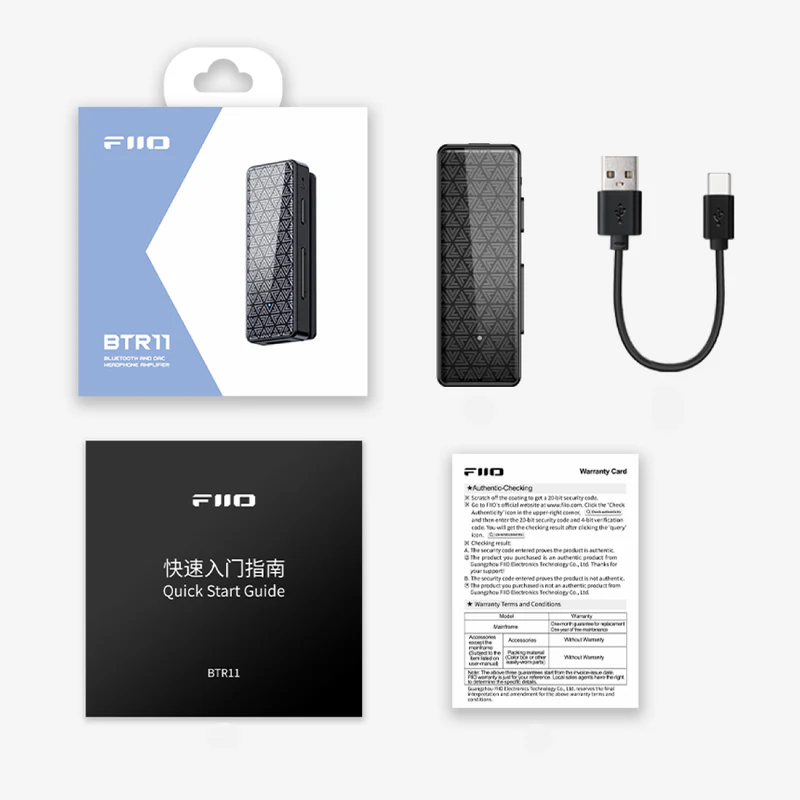
The BTR11 arrives in a small and simple box. Inside I found the unit itself, a short USB C charging cable, a quick start guide, and a warranty card. No extras such as a case, lanyard, or pouch are included, but given the extremely low price I did not expect anything more.
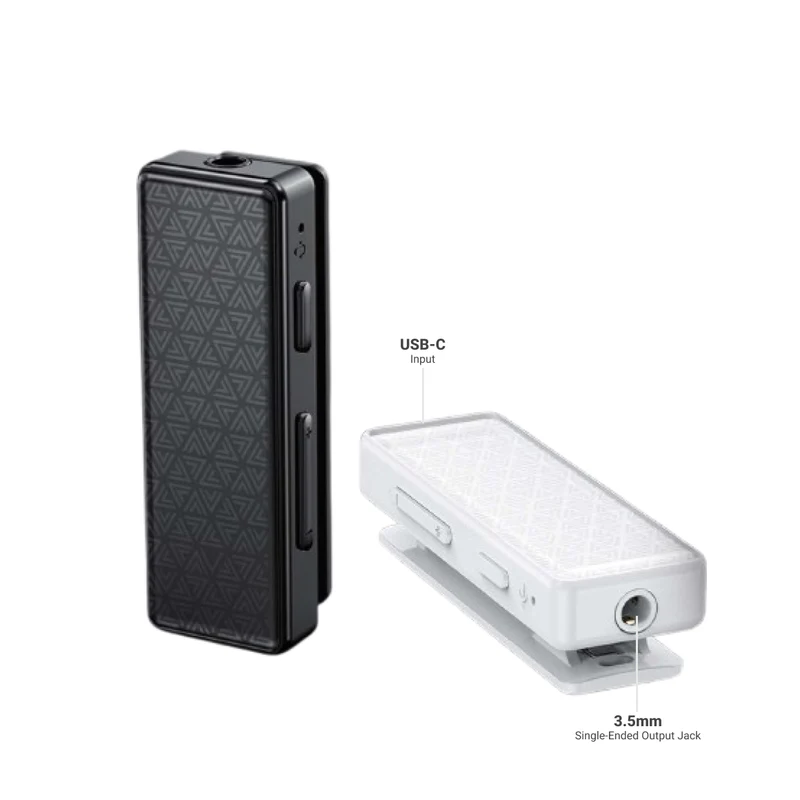
When I first picked it up I was struck by how lightweight it was. At only about 13 grams it almost disappears when clipped to a shirt or bag. The design is plain but functional. The front surface has a glossy plastic finish with a small LED indicator that flashes to show which codec is in use. The back has a spring clip with a lanyard hole, although a lanyard is not included in the box.
Build quality is mostly plastic and while it feels light and somewhat cheap, it is solid enough to withstand daily use. The buttons for power, play pause, and volume control are small but easy to operate. They also double as track skip controls. On the side there is a tiny hole for the built in microphone, on the top a 3.5mm headphone jack, and on the bottom a USB C port for charging.
Fiio BTR11 box content
Technical Specifications
Even though it is the most affordable model in Fiio’s BTR lineup, the BTR11 is packed with respectable specs:
- Bluetooth chip: BES2700IHC
- Bluetooth version: 5.3
- Supported codecs: SBC, AAC, LDAC
- Output power: 45 mW into 16 ohms, 30 mW into 32 ohms
- Frequency response: 20 Hz to 45 kHz
- Signal to noise ratio: 101 dB (A weighted)
- THD+N: less than 0.008% at 32 ohms
- Battery capacity: 120 mAh
- Battery life: up to 15 hours with AAC, around 8 to 9 hours with LDAC
- Charging time: about 1.5 hours
- Weight: 12 to 13 grams
On paper these numbers do not scream high end but they are impressive considering the cost and size of the device.
Everyday Use and Convenience
The real appeal of the BTR11 is its convenience. Smartphones no longer include headphone jacks, and while USB C dongles are an option, they are not always practical. I often found dongles cumbersome when commuting or working out. The BTR11 solves that problem by turning any wired earphone into a wireless one. I can clip it to my shirt and keep my phone in my pocket or bag.
Multi device pairing is supported, although only one device reconnects automatically when powered on. Pairing is quick and stable, and the connection range is around ten meters without obstacles. Latency is low enough for watching videos without noticeable lip sync issues, especially with LDAC.
Battery life lives up to the promises. With AAC I consistently reached more than twelve hours of playback on a single charge. With LDAC the number drops closer to eight hours, but that is still enough for a full day of listening. Charging takes just over an hour with a standard USB charger.
Controls and App
The controls are straightforward. The multifunction button powers the unit on and off, starts pairing, plays and pauses music, and answers or rejects calls. The volume buttons also serve as track skipping controls. The LED indicator flashes once for SBC, twice for AAC, and three times for LDAC, making it easy to know which codec is active.
The Fiio Control app can be downloaded for both Android and iOS, but the BTR11 does not gain any special features from it. The only purpose of the app is to perform firmware updates over the air. There is no equalizer, no button customization, and no other advanced controls. While this is a bit disappointing, I can understand why Fiio decided to keep the app functions limited at this price point.
Build and Portability
The BTR11 is designed to be as small and light as possible. The clip holds firmly on clothing, making it ideal for gym sessions, walks, or commuting. The glossy plastic front does scratch easily, so if appearance matters I would suggest choosing the white version instead of black, as scratches show less on lighter colors.
Despite the light weight, I never felt the device was fragile. I used it daily, tossing it in my pocket and clipping it to different jackets, and it never showed any structural weakness. It does not heat up during use, even when streaming over LDAC for long sessions.
Sound Quality
The first thing I noticed when plugging my earphones into the BTR11 was that it sounded cleaner and a little fuller than the headphone output of my budget smartphone. Bass had more presence, mids were natural, and treble had decent extension without becoming harsh.
The overall sound can be described as neutral leaning slightly warm. There is no obvious coloration, and it does not add artificial brightness. The soundstage is average and resolution is not on the level of higher priced DACs or amplifiers, but it is more than acceptable for casual listening.
Background hiss is minimal with most earphones, although with very sensitive IEMs a faint hiss can be heard when no music is playing. Once music starts, it disappears completely.
Microphone Performance
The built in microphone is useful for calls and voice commands, but it is clearly not the strength of this device. Indoors in a quiet environment it works fine, capturing a natural voice tone. Outdoors in busy areas the mic struggles with background noise and wind. It is serviceable for occasional calls but not a replacement for dedicated wireless earphones with advanced microphones.
Strengths of the BTR11
After weeks of using it, these are the qualities that impressed me the most:
- Ultra portable: so small and light that I often forgot it was clipped to me
- Great value: costs about twenty dollars yet performs like devices two or three times the price
- LDAC support: rare to find in such a low cost unit, and it makes a real difference in sound quality
- Stable connection: reliable Bluetooth 5.3 with no dropouts in normal use
- Battery life: enough to last a full day of listening on AAC and almost a full workday on LDAC
- Enough power: drives 99 percent of IEMs and many headphones without struggling
Limitations and Drawbacks
No device is perfect, especially at this price. The BTR11 has some clear limitations:
- No USB DAC mode: the USB C port is only for charging, it’s not possible to transform it into a USB DAC
- Limited app functions: firmware updates only, no EQ or custom controls
- Background hiss: but only with very sensitive IEMs and when no music is playing
- Microphone quality: weak in noisy environments
These are compromises I can live with given the cost, but they are worth knowing before buying.
Comparisons
Fiio itself offers more advanced models like the BTR13 and BTR15. The BTR13 has more codecs, a display, better amplification, and USB DAC functionality. The BTR15 goes even further with balanced output, EQ through the app, and a premium build. Both sound more refined and offer more control, but they also cost several times more than the BTR11.
I see the BTR11 not as a stripped down version of those models but as a different product with its own purpose. For me it feels more like a wireless replacement for a dongle adapter. If you simply want a cheap and easy way to keep using wired earphones with a phone that lacks a headphone jack, the BTR11 does the job perfectly.
Compared with some competing budget Bluetooth receivers, the BTR11 stands out because of its LDAC support and reliable performance. Many low cost alternatives only offer SBC or AAC, which limits audio quality.
Real Life Scenarios
The situations where I found the BTR11 most useful were daily commuting, gym sessions, and working around the house. In each case I appreciated not being tethered to my phone. The clip kept the device securely attached to my shirt or pocket, and the cable from my earphones was short and unobtrusive.
At the office I sometimes used it for calls, though colleagues mentioned I sounded a bit muffled compared to my phone’s built in mic. At home I connected it to powered speakers via the headphone jack to stream music from my phone, effectively turning the BTR11 into a small Bluetooth audio adapter. It worked flawlessly in this role.
Who Is the BTR11 For?
The BTR11 is for anyone who wants to keep using wired earphones or headphones with modern smartphones that no longer have headphone jacks, without relying on a dongle. It is also a great option for people who want an inexpensive way to try out the wireless lifestyle without committing to expensive Bluetooth earphones.
It will not satisfy audiophiles who demand ultimate resolution, balanced outputs, or detailed app control. For those users, the BTR13 or BTR15 are better choices. But for everyday listeners who want convenience and decent sound quality at the lowest possible cost, the BTR11 is hard to beat.
Final Thoughts
The Fiio BTR11 surprised me. I expected a basic cheap gadget but ended up using it daily and appreciating its balance of features and performance. It is not the most powerful, not the most refined, and certainly not the most premium in feel, but it offers a level of utility that makes it one of the best twenty dollars I have spent on audio gear.
If you need a simple way to make your wired earphones wireless, if you want to listen on the go without dangling dongles, or if you just want an inexpensive Bluetooth adapter that works reliably, the Fiio BTR11 is an excellent choice.
For me it turned into a device that I now keep clipped to my shirt whenever I leave the house. Small, light, affordable, and practical, the BTR11 proves that sometimes less really is more.
Where to Buy
You can find the Fiio BTR11 on:
Affiliate Disclaimer: Listen Vibes may earn commissions from qualifying purchases that helps to maintain the website - at no extra cost to you.