When I first put the Fiio FT1 on my head, I immediately felt something different. It was not just another budget headphone trying to look fancy - it was a product designed with care, one that blended excellent craftsmanship, refined tuning, and a clear sense of purpose. At $150, it sits in one of the toughest markets for headphones, surrounded by models from Sennheiser, Audio-Technica, AKG, and Beyerdynamic. But somehow, the FT1 manages to stand out by offering a natural, musical, and well-balanced sound signature that makes it feel much more expensive than it actually is.
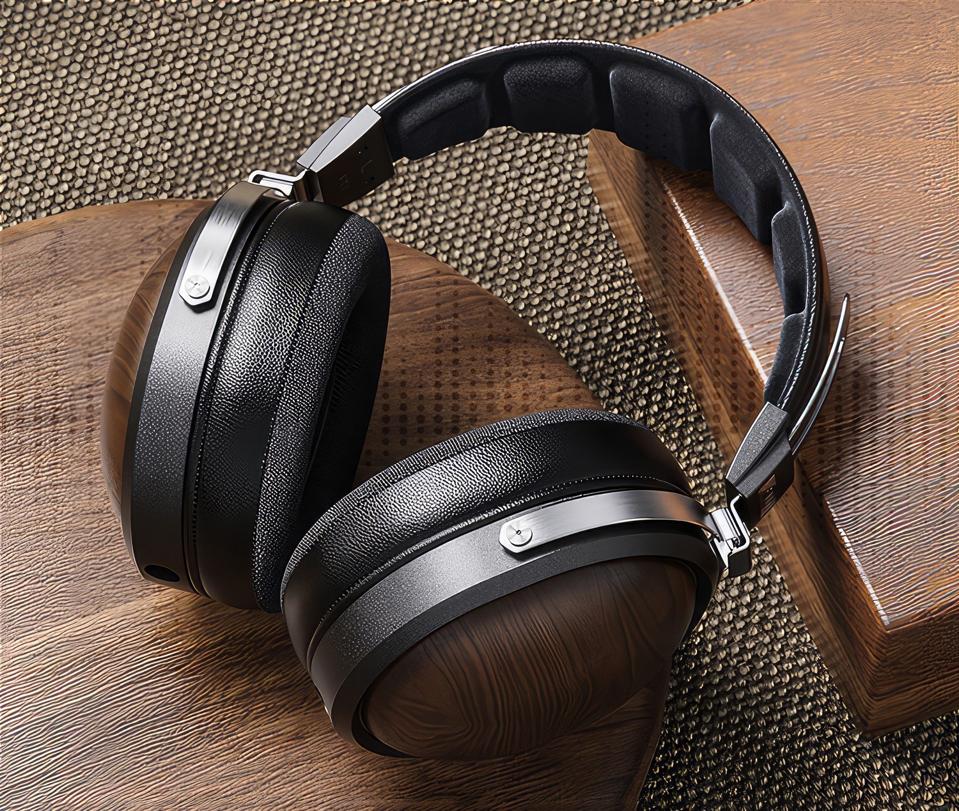
Fiio FT1
Unboxing Experience
Fiio has a reputation for presenting its products beautifully, and the FT1 follows that tradition perfectly. The box is elegant and well-organized, with the headphones displayed sideways so that the natural wood cups are the first thing you see. Inside, everything feels neat and premium.
The hard carrying case is one of the best I have seen in this price range. It feels solid and protective, with a canvas-like exterior that reminds me of cases from Focal. It holds the headphones and accessories securely, making it ideal for storage or travel.
Fiio includes two high-quality detachable cables: one with a 3.5 mm single-ended connector and another with a 4.4 mm balanced termination. Both are fabric-sheathed, thick, and flexible, with metal connectors that look and feel premium. There’s also a 6.35 mm adapter in the box. These cables alone could easily justify part of the asking price - it’s rare to find such quality accessories at this level.
Overall, the unboxing gives the impression of a thoughtful product made to please both newcomers and experienced listeners. Everything feels intentional, and nothing about the package screams “budget”.
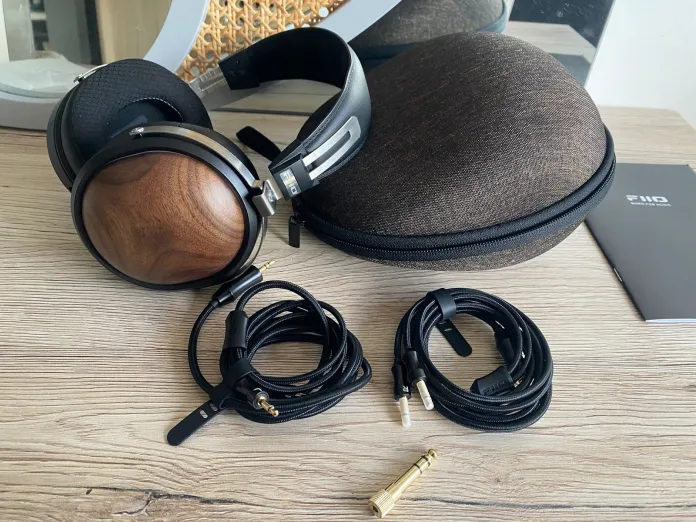
Fiio FT1 Accessories
Build Quality and Design
The Fiio FT1 is a closed-back, full-size dynamic headphone with real wood earcups. My unit features the darker American walnut finish, which looks luxurious and feels smooth to the touch. There’s also a lighter beech version, and both are CNC-milled from solid wood blocks, making each pair visually unique. The mixture of natural wood and metal gives the FT1 an understated yet classy appearance that I personally love.
The headband mechanism is especially clever. Fiio developed a three-axis adaptive system with a ball-bearing slide rail that allows for precise adjustment and smooth movement. Each side has multiple notches, giving the right balance between stability and flexibility. The headband itself has soft padding covered in synthetic leather on top and a suede-like material underneath with small bumps that distribute pressure evenly across the head.
The ear pads are detachable, deep enough to prevent my ears from touching the drivers, and use a breathable fabric on the face to reduce heat buildup during long sessions. I can wear the FT1 for hours without discomfort. The clamping force is just right - firm enough to maintain a seal but never too tight.
At around 340 grams, the headphone feels light for its size, and the build quality inspires confidence. The yokes and extenders are metal, and despite the few plastic parts, nothing feels cheap or fragile. Fiio clearly paid attention to every small detail.
If I had to nitpick, the cups do not swivel completely flat, so when traveling you’ll want to use the included case. But aside from that, the design is excellent for the price - elegant, practical, and solidly built.
Specifications
| Feature | Specification |
|---|---|
| Driver Type | 60 mm Dynamic Driver |
| Diaphragm Material | PU + Nanowood Fiber Composite |
| Voice Coil | 25 mm Copper Voice Coil |
| Impedance | 32 Ω @ 1 kHz |
| Sensitivity | 98 dB/mW (113 dB/Vrms) |
| Frequency Response | 10 Hz – 40 kHz |
| Weight | Approx. 340 g (without cable) |
| Ear Cup Material | American Black Walnut or Beech Wood |
| Headband Mechanism | 3-axis adaptive with ball-bearing slide rail |
| Cable Type | Silver-plated Oxygen-Free Copper (392 strands) |
| Cable Length | 1.5 m |
| Connectors | Dual 3.5 mm to 3.5 mm (SE) and Dual 3.5 mm to 4.4 mm (Balanced) |
| Passive Noise Reduction | Up to 26 dB |
| Included Accessories | Hard carrying case, 6.35 mm adapter, quick-start guide |
Sound Performance
The sound of the FT1 surprised me from the first track. It immediately struck a balance between warmth and clarity that is difficult to find in this category. I would describe its tuning as slightly V-shaped, with a mild emphasis on the lows and highs but without pushing the mids too far back. The overall tonality feels natural, cohesive, and musical, making the headphone enjoyable across many genres.
Bass
The bass on the FT1 is full and satisfying. It has real sub-bass presence, providing a tactile rumble you can feel rather than just hear. It extends deep into the lowest registers, reaching below 40 Hz with confidence. There’s punch and authority without sounding bloated or uncontrolled. On bass-heavy tracks, it delivers a physical sense of impact that reminds me of much more expensive dynamic headphones.
Mid-bass is slightly elevated, giving the FT1 a warm character and a solid foundation for drums and bass guitars. In some recordings, it can add a bit of thickness, but it never crosses into muddy territory. Fiio managed to keep the transition between bass and mids clean, which is impressive for a closed-back design. The 60 mm dynamic driver responds quickly, with good texture and speed - enough to handle complex bass lines without smearing.
Midrange
The midrange is where the FT1 truly shines. Vocals sound natural, clear, and full of life. Male voices have body and warmth, while female vocals carry a pleasant energy and sparkle. The tuning follows a Harman-like curve but adds a touch of richness around the lower mids, which makes acoustic instruments, guitars, and pianos sound realistic and engaging.
Unlike many closed-back headphones that suffer from hollow or congested mids, the FT1 remains open and expressive. The tonality feels organic - the relationships between notes and harmonics sound believable, giving instruments a natural timbre. Even compared to some open-backs, the FT1 keeps up remarkably well in terms of tonal accuracy.
Treble
The treble extends smoothly and adds air to the presentation without harshness. There’s enough sparkle to highlight cymbals and strings, but it stays refined and never piercing. Some listeners may notice a small peak around 8 kHz depending on the source, but it’s subtle and adds clarity rather than fatigue.
After a short burn-in period, the highs become slightly smoother and more refined. I find the FT1’s treble to be energetic yet controlled - bright enough to bring out details but polite enough for long listening sessions.
Soundstage and Imaging
For a closed-back headphone, the soundstage is surprisingly wide. It’s not an open-back experience, of course, but the presentation extends beyond the ears, creating a sense of space and separation. The imaging is sharp, allowing instruments to be easily located in the mix. On tracks recorded in large acoustic spaces, the FT1 conveys depth and ambiance better than expected.
Dynamics and Driveability
With an impedance of 32 ohms and a sensitivity of 98 dB/mW, the FT1 is easy to drive. It performs well from portable DAC/amps or even a smartphone dongle, but it scales beautifully with more power. When connected to my Fiio K9 AKM or Aune S9c Pro, the sound gains extra body, tighter control, and wider dynamics. It’s a headphone that grows with your setup.
Comparisons
In this price range, competition is fierce, and the FT1 faces several strong rivals.
AKG K371
The AKG K371 has long been one of my favorite budget closed-backs thanks to its balanced tuning. However, its build quality feels plasticky next to the wood-and-metal construction of the FT1. Sonically, the K371 is a bit more neutral, but the Fiio sounds richer, with deeper bass and smoother highs. If you prefer analytical listening, the AKG still has an edge, but for musical enjoyment, the FT1 wins easily.
Sennheiser HD 620S
Sennheiser’s new closed-back is about twice the price of the FT1, yet its unboxing experience feels less premium. The HD 620S offers slightly higher resolution, but its treble can be sharp. The FT1 sounds warmer and more inviting, with a better balance for long listening sessions.
Focal Elegia and Denon AH-D5200
When comparing tonality, the FT1 shares a similar spirit with higher-end models like the Focal Elegia or Denon D5200. Those headphones cost two to three times more, yet the FT1 holds its own in bass texture and midrange naturalness. Of course, it doesn’t reach the same technical refinement, but it captures the essence of that lush, musical character.
Fiio FT3 and FT5
Within Fiio’s own lineup, the FT1 sits below the open-back FT3 and FT5. While those models offer a more spacious presentation, the FT1 brings better isolation and a warmer, more intimate sound. It’s the more versatile choice if you need a closed-back for work, commuting, or late-night listening.
Who Is the Fiio FT1 For?
The FT1 is perfect for listeners who want a closed-back headphone that sounds natural yet fun, with excellent build quality and comfort. It’s not a reference tool for mixing or mastering, but rather a musical companion that works with every genre - from jazz and rock to electronic and pop.
If you value craftsmanship, enjoy wood aesthetics, and want something that feels and sounds premium without breaking the bank, the FT1 is a fantastic choice. It’s also ideal for anyone who wants an easy-to-drive headphone that doesn’t demand an expensive amplifier to perform well.
The only people who might look elsewhere are those who require strong passive isolation - while the FT1 isolates reasonably well, it’s not as sealed as studio monitoring models like the DT 770 Pro. Still, for everyday use, it strikes a very comfortable balance between openness and isolation.
Conclusion / Final Verdict
The Fiio FT1 impressed me in every way that matters. From its beautiful wood construction to its thoughtful accessories, from its warm yet detailed tuning to its surprising comfort, it feels like a product made by enthusiasts for enthusiasts. It doesn’t try to chase exaggerated bass or artificial sparkle - instead, it focuses on balance, texture, and musicality.
In a market filled with plastic and compromise, the FT1 feels refreshingly authentic. It captures the soul of music without straining your ears or your wallet. Whether you’re just starting your hi-fi journey or looking for a stylish and capable closed-back for daily listening, the FT1 delivers more than I ever expected for its price.
Fiio once again proves that great sound doesn’t have to be expensive. The FT1 isn’t just a good headphone for $150 - it’s a reminder that true value still exists in the audio world. And for me, it’s easily one of the most enjoyable closed-backs I’ve listened to this year.
Where to Buy
You can find the Fiio FT1 on:
Affiliate Disclaimer: Listen Vibes may earn commissions from qualifying purchases that helps to maintain the website - at no extra cost to you.