When the FiiO K13 R2R arrived on my desk, I already had high expectations. I was eager to hear how FiiO would bring the distinctive R2R sound to a more accessible desktop package. From the moment I started listening, it was clear this device was something special. After weeks of testing with different headphones and IEMs, I realized the K13 R2R sets a new benchmark for what’s possible in a desktop DAC and amplifier at this price.
Fiio K13 R2R
Build and Design
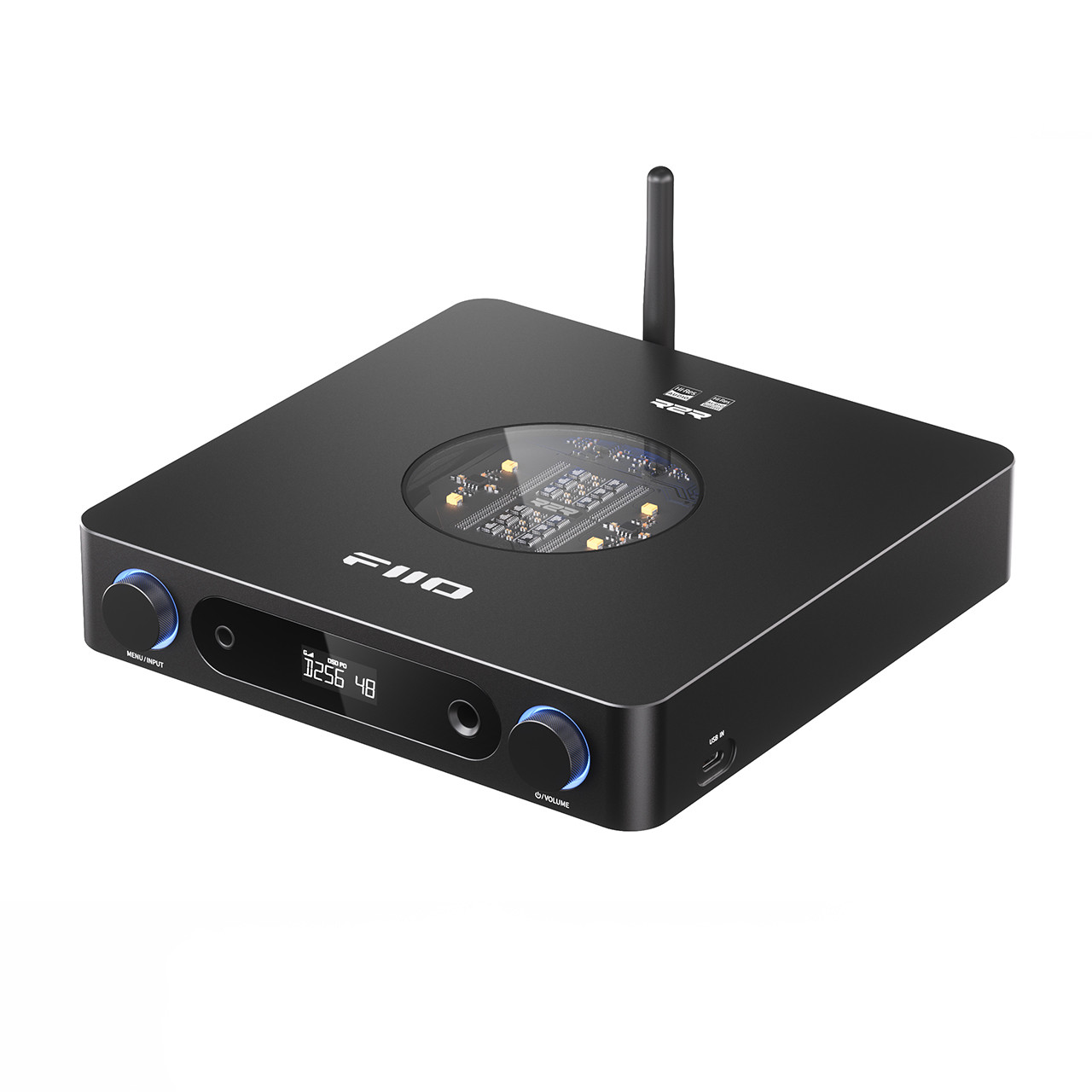
The first thing I noticed is how solid the aluminum chassis feels. The K13 is bigger than the K11, yet still compact enough for a clean desktop setup. The top “skylight window” immediately caught my eye - it lets you peek at the R2R ladder array glowing softly underneath. It’s a beautiful touch that connects the look of the device with its analog heart.
On the front, there are two smooth aluminum knobs - one for volume and one for input and menu control - flanking a clear LCD display. The 4.4 mm balanced and 6.35 mm single-ended outputs sit neatly below, ready for any headphone I plug in. The tactile feedback from both knobs feels premium, and the display is bright and easy to read even in low light.
FiiO also added a side USB-C port, and I ended up using it far more than I expected. When I connect a DAP or smartphone via OTG, I can simply plug it in from the side without reaching behind my monitor. It’s a small but smart improvement that makes everyday use easier.
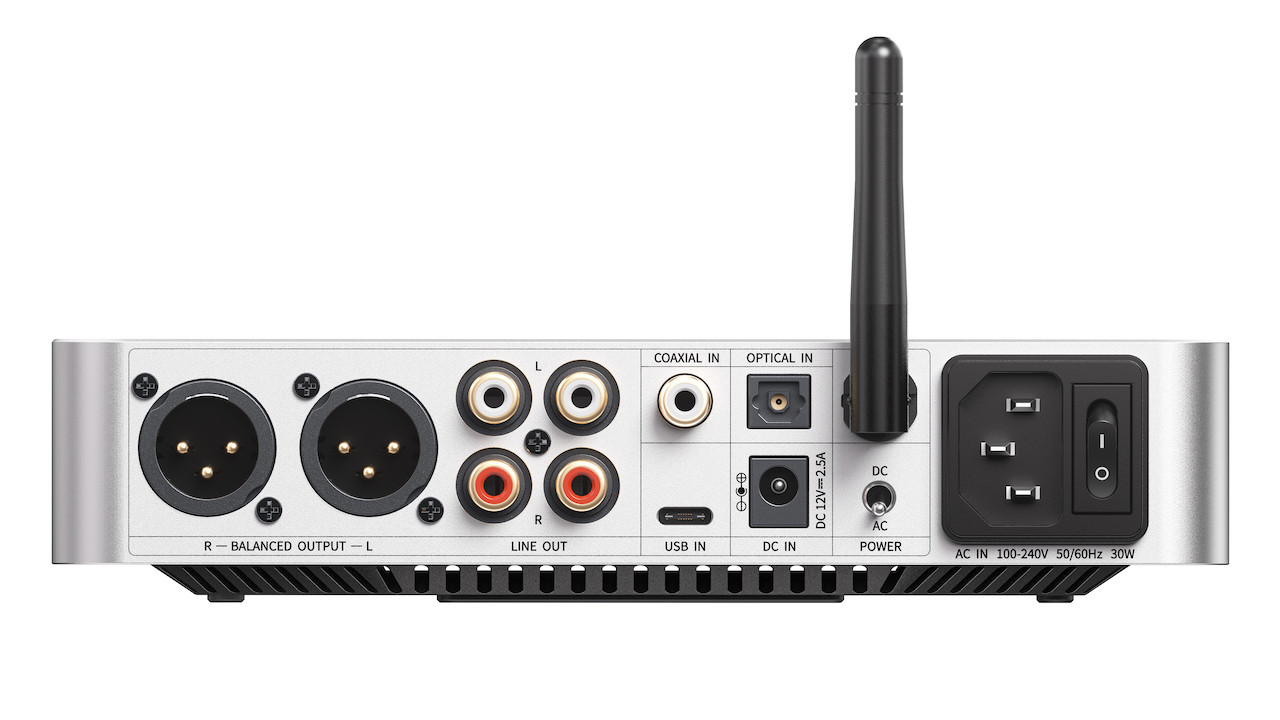
The back panel is packed with connections-USB, optical, coaxial, RCA, and balanced XLR outputs-plus both AC and DC power inputs. There’s even a switch to choose between the built-in linear power supply and an external one. The addition of Bluetooth 5.4 with LDAC, AAC, and SBC support means I can also stream wirelessly when I want a tidy, cable-free setup.
Every part of the K13 feels purposefully designed. Rounded edges, tight construction, and customizable RGB lighting add polish without flashiness. It feels like a serious piece of audio gear rather than a toy.
Fiio K13 R2R back
Specifications
| Feature | Detail |
|---|---|
| DAC Type | Fully differential 24-bit R2R resistor ladder |
| Amplifier | Dual OPA1642 + TPA6120A2 chips |
| Output Power | 2400 mW @ 32 Ω (balanced), 1200 mW @ 32 Ω (single-ended) |
| Supported Formats | PCM up to 32-bit / 384 kHz, DSD 256 |
| Bluetooth | 5.4 (LDAC, AAC, SBC) |
| EQ | 10-band parametric EQ with PC and mobile control |
| Inputs | USB-C (rear and side), optical, coaxial |
| Outputs | 4.4 mm, 6.35 mm, RCA, XLR, pre-out |
| Power | Internal linear PSU or external 12 V DC input |
| Price | ≈ $319 USD |
Everyday Usability
In daily use, the K13 strikes a perfect balance between power and convenience. It has enough muscle to drive any headphone I own - planars like the HIFIMAN HE400se, as well as sensitive IEMs - and it does so silently, with zero hiss or background noise on low gain.
The interface is simple. The left knob brings up menus where I can change inputs, toggle between oversampling (OS) and non-oversampling (NOS) modes, select gain levels, or tweak EQ settings. I can even adjust display brightness and LED intensity. Everything feels smooth and logical, and the remote control adds extra comfort when the unit sits away from my main desk.
I especially appreciate the 10-band parametric EQ. Through the FiO Control app or web interface, I can fine-tune frequencies, apply auto-EQ profiles for specific headphones, or store up to ten custom presets. The EQ applies globally across all inputs, which is surprisingly rare at this price.
Inside the R2R Heart
Unlike common delta-sigma DACs, the K13 uses a fully discrete resistor ladder - 48 precision resistors per channel, matched to 0.1 % tolerance and 30 ppm temperature stability. Each channel processes positive and negative signals independently, resulting in a fully differential architecture that cancels out noise and distortion. The result is an impressively clean background and excellent stereo separation.
The K13 offers both NOS and OS playback. In NOS mode, the sound feels fluid and organic, with a gentle warmth and analog flow that reminds me of vinyl playback. Transients are slightly softer, but the music breathes more naturally. I love this mode for acoustic, jazz, and vocal-centric recordings.
Switching to OS mode tightens everything up. The sound becomes more precise and focused, with faster attack and a bit more sparkle in the highs. It’s perfect for electronic or rock tracks that benefit from extra clarity. Both modes are easy to toggle, letting me tailor the presentation to my mood.
Sound Impressions
The FiiO K13 R2R has a sound that immediately feels alive and human. It carries that unmistakable R2R warmth but with a cleaner, more spacious presentation than its predecessor. Compared to many delta-sigma DACs, it trades a bit of analytical sharpness for musical realism and long-term comfort.
Bass
The bass feels authoritative and well-controlled. It digs deep when needed, but it’s tight and textured rather than bloated. I can feel the sub-bass rumble on electronic tracks while still hearing the detail in bass guitars or kick drums. The transient speed is faster than the K11, giving percussion more snap and precision. It’s a confident, mature low end that provides solid grounding without overwhelming the mids.
Midrange
The K13 truly comes into its own in the midrange, where its natural warmth and convincing tone make vocals and acoustic instruments deeply engaging. Male voices sound full and resonant, while female vocals carry a gentle, airy sweetness. Guitars, pianos, and strings feel tangible and realistic, with just the right amount of body to sound lifelike without unnecessary coloration. The harmony between warmth and clarity feels perfectly judged, making extended listening effortless and enjoyable.
Treble
The treble is smooth yet extended. It adds air and shimmer without harshness. Cymbals have natural texture and decay, and the upper harmonics of strings and brass sound open and refined. It’s detailed, but never sharp or fatiguing. Compared to delta-sigma DACs, the K13’s highs feel slightly softer but more believable-less “digital,” more musical.
Soundstage and Imaging
The K13 projects a wide, three-dimensional stage with impressive depth. Instruments occupy distinct spaces, and I can easily visualize where each performer sits in the mix. The sense of layering and distance adds realism, especially in well-recorded live tracks. It creates that illusion of space that pulls me deeper into the music.
Dynamics
Dynamic range is excellent. The K13 captures both the quiet subtleties and the explosive peaks of a track with confidence. Macro-dynamics feel powerful and engaging, while micro-details like breath, finger movement, or room echo are rendered cleanly. It delivers this energy without sounding compressed or sterile-everything feels alive and effortless.
Performance as DAC and Amp
As a standalone DAC, feeding powered monitors through XLR outputs, the K13 preserves that natural tone and adds a touch of warmth that flatters most recordings. As a headphone amplifier, it has more than enough control to drive even demanding planars without strain. Running in balanced mode, the output feels lively and effortless, with headroom to spare.
I often compare it with the Topping DX5 II and FiiO K15. The K13 may not reach their absolute technical precision or brute force, but it delivers a sound that’s more inviting and less clinical. It feels tuned for enjoyment rather than measurement contests-and I find myself listening longer because of it.
The EQ Experience
The built-in parametric EQ is among the most flexible I’ve seen on a desktop DAC amp in this range. Whether I want to tame treble peaks on a bright headphone or add a gentle lift to sub-bass, the system responds instantly. Still, most of the time I prefer to leave EQ bypassed and enjoy the pure R2R tonality. The DAC’s native balance feels so natural that it rarely needs tweaking.
Noise and Gain
Noise floor is impressively low. Even with ultra-sensitive IEMs, background hiss is virtually inaudible on low gain. Medium gain gives extra headroom for higher-impedance headphones, and high gain can easily push planars to satisfying levels. The power scaling feels linear and controlled throughout the range.
Final Thoughts
After weeks of daily use, the FiiO K13 R2R has earned a permanent place on my desk. It’s one of those rare products that combines technical ability, usability, and musical soul in equal measure. It doesn’t try to be the most analytical DAC or the most powerful amp-it simply makes music sound right.
If you want to experience the analog-like warmth of R2R conversion without spending thousands, this is the one to get. It’s beautifully built, thoughtfully designed, and delivers sound that feels real and immersive. The K13 R2R doesn’t just outperform its price-it redefines what affordable high-end can mean.
Verdict: The FiiO K13 R2R is a bigger, smarter, and more capable evolution of the K11 R2R-offering natural sound, serious power, and incredible versatility for the price. It’s one of the most satisfying desktop DAC amps I’ve ever used.
Where to Buy
You can find the Fiio K13 R2R on:
Affiliate Disclaimer: Listen Vibes may earn commissions from qualifying purchases that helps to maintain the website - at no extra cost to you.