The Hifiman Edition XS is the kind of headphone that makes the usual price ladder feel less orderly. Its appeal is not luxury materials or elaborate presentation; it is the amount of open back planar performance packed into a comparatively attainable product. What stands out to me is scale: a large, airy presentation, sharp imaging, fast transients, and bass extension that reaches lower than I expect from many open headphones in this class.
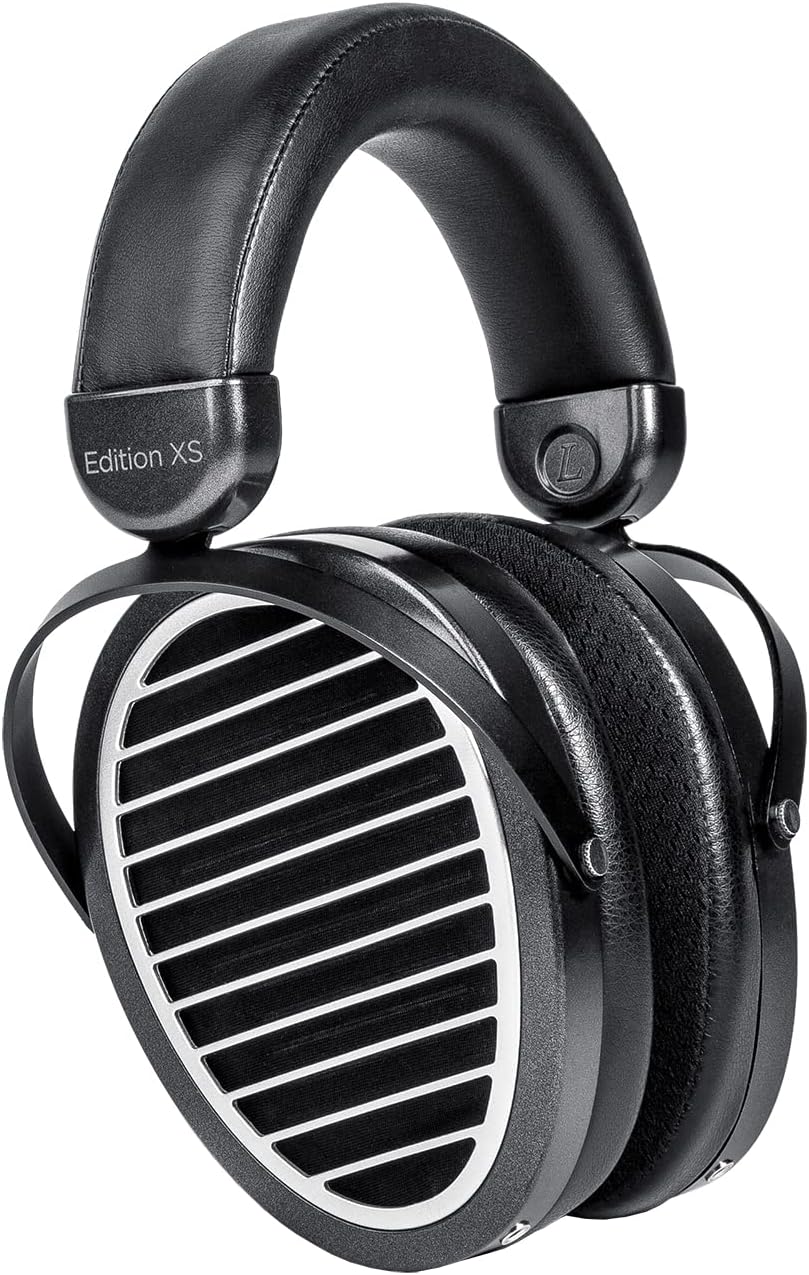
Hifiman Edition XS
That value proposition has become more interesting as the Edition XS has dropped well below its original $500 positioning in some markets. At that point, it stops feeling like a simple step up from mainstream mid-fi headphones and starts looking like an inexpensive doorway into Hifiman’s larger egg shaped planar presentation.
It is not universally easy to recommend. The cups are enormous, the headband can fit smaller heads awkwardly, clamp may feel too loose for some listeners, and the mostly polymer construction does not communicate the same luxury as the sound. Treble is also the most divisive part of the tuning: I can understand why some listeners hear it as airy and non-fatiguing, while others find certain tracks bright or splashy. Even with those caveats, the central attraction is clear: the Edition XS puts soundstage, imaging, speed, and detail first, and it does so at a price where those strengths remain difficult to ignore.
Unboxing and First Impressions
The unboxing experience is deliberately plain. Hifiman moved away from the more decorative presentation used on some older models and packages the Edition XS in a simple brown box with molded foam. It is a practical rather than luxurious approach, which fits the broader character of the headphone: the money feels concentrated on the transducer and sonic performance instead of presentation.
One clever detail is that the foam insert can double as a basic headphone stand. It is tall enough to hold the Edition XS while leaving the cable connected, so it is more useful than disposable packing material. I would not mistake it for a premium desktop stand, but it gives the sparse presentation a second purpose.
The headphone itself makes a much stronger first impression than the box. Those elongated, teardrop shaped cups are huge, visibly open, and immediately distinguish the XS from conventional circular designs. The cable connection uses dual 3.5 mm entries at the cups. Because the cups extend so far downward, connector length matters; longer plugs can brush the shoulders, so shorter 3.5 mm terminations are the practical choice. Overall, this is an unboxing that prioritizes function over ceremony.
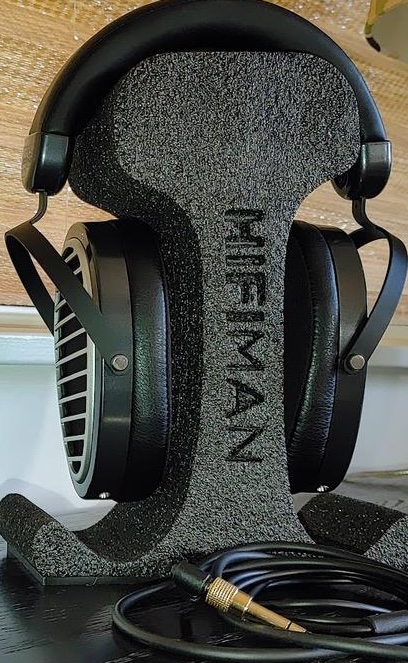
Hifiman Edition XS Accessories
Build Quality and Design
The Edition XS has an industrial look that I think suits it better than the materials list might suggest. The black structure, silver toned grille, and oversized egg shaped cups make it unmistakably Hifiman. The yokes and grilles use lightweight metal, while much of the remaining structure is polymer. It feels built to keep weight manageable rather than to deliver a dense, jewelry-like sense of luxury.
The cup articulation is somewhat limited, but there is enough adjustment to accommodate different head shapes. The bigger issue is scale. The cups are exceptionally long, and on smaller heads the headphone can sit lower than ideal even near the minimum headband setting. Some listeners also find the clamp unusually weak. On the other hand, the large pads distribute pressure broadly, and long sessions can remain comfortable once the fit is right. I see comfort here as highly head-dependent.
The headband is another compromise. It can create more distinct pressure points than Hifiman’s suspension style designs, and people who struggle with the stock fit may prefer an added comfort strap. The pads themselves are substantial and use a softer contact surface, helping the large chassis remain wearable.
Sound Quality
The Edition XS has a spacious, balanced leaning presentation built around speed, extension, and separation. To my ears, its defining trait is the way the large planar drivers create scale. Notes have room around them, positional cues are easy to follow, and the headphone can sound expansive without sacrificing focus.
Bass
Bass reaches deep and stays controlled. The sub bass extension is one of the Edition XS’s strongest traits, especially compared with open back designs that begin to fade earlier. I hear more texture and speed than exaggerated weight: bass lines are easy to follow, transients arrive cleanly, and decay does not linger unnecessarily.
I would not call the XS a hard hitting basshead headphone. Its low end is more about extension, speed, texture, and control than sheer impact, and a good closed back dynamic headphone can deliver more physical punch. Still, the Edition XS has enough authority to make rock and fast paced music engaging, while its definition and responsiveness keep busy bass lines clean and easy to follow.
Midrange
The midrange is generally clean, detailed, and well separated. Vocals and instruments occupy distinct spaces, and the lack of excessive warmth helps complex arrangements stay intelligible. There is, however, a mild recessed character above roughly the lower midrange before energy rises again toward the upper mids. That contour contributes to the sense of space but can make some male vocals sound a little thinner or less energetic than on a more mid forward headphone.
This is where I would place the Edition XS behind the Sennheiser HD600/HD650 family for pure vocal timbre. The Hifiman sounds larger and more spacious, while the Sennheisers remain compelling when natural midrange tone is the priority.
Treble
Treble is the most contentious part of the Edition XS. I can hear why some listeners describe it as airy, detailed, and surprisingly smooth: on good recordings it adds openness and sparkle without automatically turning sharp. There is plenty of information in cymbals, upper harmonics, and ambient detail.
The upper treble can sound bright, splashy, or occasionally piercing, especially on certain recordings, and the Edition XS has a noticeable peak around 12 kHz. I would not describe it as a consistently non fatiguing headphone for every listener. If you are sensitive to treble, this is the area I would pay the most attention to, and it is also one of the most obvious places to experiment with EQ.
Technical Performance
Technical performance is where the Edition XS earns its reputation. The soundstage is wide, imaging is precise, and the large driver geometry creates a presentation that extends above and below the ear rather than feeling concentrated at one point. That scale is useful for music and gaming, where directional placement and distant cues benefit from the combination of width and accuracy.
Detail retrieval is strong for the price. The Sundara remains capable, but the XS steps toward greater space, extension, and separation. The Arya Stealth pushes those qualities further, yet at a much higher cost.
The Edition XS can reach good listening levels from relatively modest sources, so it does not demand an unusually powerful amplifier just to work properly. Still, I find that it benefits from a capable DAC/amp with a bit more headroom, especially if the goal is to get the most out of its dynamics, control, and overall presentation. You do not need exotic amplification, but pairing it with a competent dedicated source makes sense if you want to maximize its potential.
How It Compares
Against the Sundara, the Edition XS sounds like the more ambitious headphone. The Sundara is smaller and can feel immediately comfortable, but the XS extends deeper in the bass, creates a wider stage, and presents more detail and separation. I also find the XS’s larger physical presentation to be part of the upgrade; the sound feels less confined to the center of the ear.
The Sennheiser HD560S remains a strong lower cost option with good imaging and useful bass extension, but it does not match the XS for stage scale or detail retrieval. The HD6XX/HD650/HD600 family takes the opposite approach: it gives up sub bass reach, upper treble sparkle, and spaciousness in exchange for a more intimate presentation and natural midrange timbre. I would choose the Sennheisers for vocals and tonal intimacy, the Edition XS for openness and technical scale.
The Arya Stealth is the most revealing comparison because it shares the broader Hifiman character. It offers greater separation, air, and a grander sense of space, but the Edition XS captures enough of that experience that the price difference becomes difficult to justify purely on proportional sonic improvement. That is the XS’s competitive advantage: it combines enough high end planar qualities that spending substantially more quickly enters diminishing return territory.
Is It Right for You?
I would put the Edition XS near the top of the list for someone who wants a serious open back planar and cares more about sound than luxury construction. It makes particular sense for listeners who prioritize wide staging, imaging, detail, fast transients, and deep but controlled bass. Fast-paced genres such as metal benefit from the planar speed, while orchestral, electronic, ambient, and game soundtracks can exploit the scale and separation.
It is also compelling for gaming. The broad soundstage is not just big for effect; imaging remains precise enough to place positional cues clearly, making the XS useful for immersive and competitive play.
I would be more cautious if you have a small head, want strong clamp, prefer compact headphones, or dislike oversized cups. I would also look elsewhere if your ideal presentation is intimate and midrange focused, or if you are very sensitive to upper treble peaks and do not want to use EQ.
For everyone else, the Edition XS is especially attractive when priced far below its original launch level. It delivers many spatial and technical qualities that make expensive planar headphones appealing without demanding the same budget.
Final Verdict
The Edition XS succeeds because its compromises are easy to identify and its strengths are difficult to replicate for the money. The packaging is plain, the materials are functional rather than luxurious, fit can be awkward on smaller heads, and treble can cross from airy into bright depending on the listener and recording. Those are meaningful caveats, not footnotes.
Yet the sonic package remains exceptional: deep planar extension, quick bass, clean mids, strong detail, precise imaging, and a genuinely large soundstage. The XS also scales high enough to hint at much more expensive Hifiman models without making a premium amplifier mandatory from day one.
I would recommend it most strongly to listeners who want an expansive, technically capable open back headphone and are willing to trade premium construction for acoustic performance. If the fit works and the treble agrees with you, the Edition XS remains one of the clearest examples of diminishing returns working in the buyer’s favor.
Where to Buy
You can find the Hifiman Edition XS on:
Affiliate Disclaimer: Listen Vibes may earn commissions from qualifying purchases that helps to maintain the website - at no extra cost to you.