Five drivers per side might sound like a recipe for an aggressively detailed IEM, but the Kiwi Ears Stardust takes a more relaxed approach. With a 10 mm dynamic driver and four balanced armatures in each earpiece, it offers an ambitious hybrid configuration for less than $80. Yet its character is defined less by the number of drivers than by how naturally they work together.
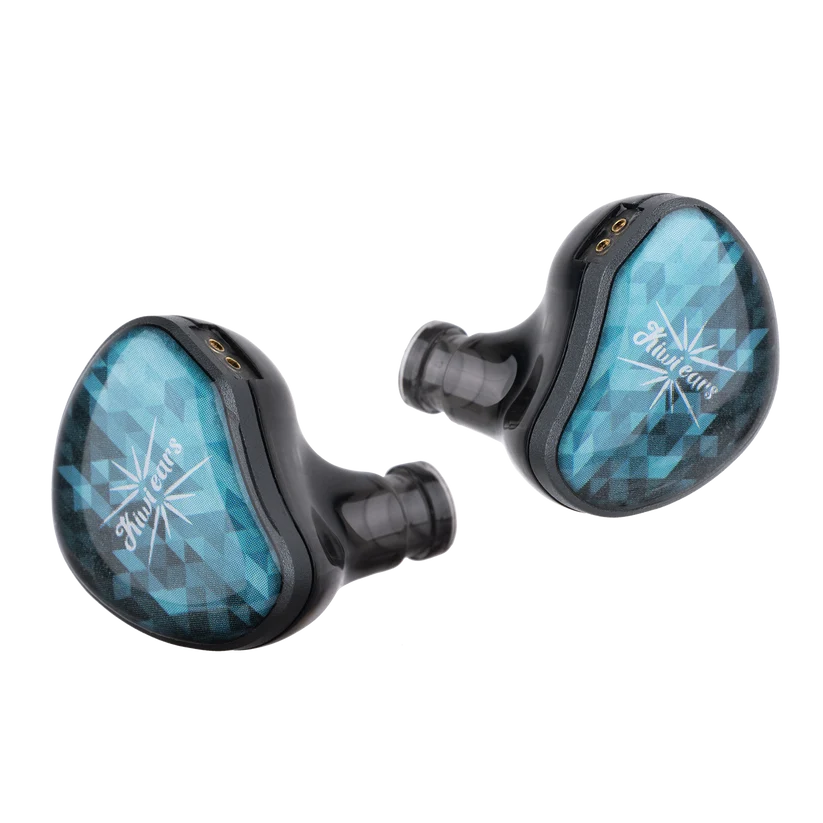
Kiwi Ears Stardust
I find this approach particularly appealing. The affordable IEM market is full of products competing through specifications, prominent bass, and increasingly energetic treble. The Stardust instead puts musicality and tonal coherence at the center of the experience. Its bass has satisfying weight without losing control, its midrange remains smooth and pleasant, and its treble provides detail without becoming unnecessarily aggressive.
This does not mean the Stardust is completely neutral. There is a noticeable warmth to its presentation, and the bass contributes more to its character than the upper frequencies. However, the overall tuning remains balanced enough to accommodate different genres without drawing excessive attention to any particular part of the spectrum. The result is an inviting sound that prioritizes enjoyment over an immediate technical spectacle.
The Stardust also combines a lightweight construction with straightforward connectivity and easy amplification requirements. Its accessory package is basic, and its technical performance has some limitations, but neither point changes its fundamental appeal. For me, the interesting question is not whether five drivers can outperform a simpler configuration. It is whether their integration produces a genuinely satisfying listening experience. The Stardust makes a convincing case for choosing coherence over complexity.
Unboxing and First Impressions
The Kiwi Ears Stardust arrives in a relatively simple package, consistent with its affordable positioning. This is not an IEM that attempts to create a premium impression through elaborate presentation or an extensive collection of accessories. The focus is on providing the essentials needed to get started.
Inside the package are the earpieces, a detachable cable, and the basic accessories required for everyday use. The cable uses two oxygen-free copper conductors with a Silver Litz structure. Although that sounds relatively sophisticated, I would describe the overall accessory experience as functional rather than luxurious. The included cable does its job, but it is not an especially compelling reason to choose the Stardust.
One practical consideration is the available termination. Kiwi Ears offers a standard 3.5 mm version without a microphone, a 3.5 mm version with a microphone, and a USB Type-C version with a microphone. This makes it possible to select a configuration appropriate for a conventional headphone output or a compatible mobile device. However, a 4.4 mm balanced option is not part of the standard selection.
I appreciate the availability of microphone equipped versions, especially for someone intending to use the Stardust with a phone or computer. At the same time, I would have liked a little more flexibility for enthusiasts who already use dedicated audio equipment.
Ultimately, the unboxing experience is unlikely to be the highlight of owning the Stardust. It is a straightforward package that puts the available budget toward the earphones themselves. Given the sound quality on offer, I find that a reasonable compromise.

Kiwi Ears Stardust Accessories
Build Quality and Design
The Stardust combines a lightweight resin body with an aluminum faceplate, giving it a construction that feels appropriate for its price category. The design emphasizes smooth, flowing lines rather than an unnecessarily elaborate shape. I like this relatively restrained approach because it makes the earphones look purposeful without relying on visual complexity to communicate their technical specifications.
Despite accommodating five drivers per side, the shells remain lightweight and comfortable. Their smooth contours help make the Stardust suitable for extended listening, which is particularly important given its relaxed sound signature. An IEM designed around long-term musical enjoyment benefits from a physical design that does not become a distraction after a few songs.
Isolation is adequate for ordinary use, although I would not treat it as a standout feature. As with other in-ear monitors, achieving a suitable seal is important both for comfort and for maintaining the intended bass response. The Stardust’s relatively approachable shell design helps, but individual ear anatomy and ear-tip selection will still influence the result.
The detachable cable is another welcome practical feature. Its construction is sufficient for everyday listening, even if it is not particularly impressive as an accessory. I see the ability to replace a cable as more valuable than elaborate material claims, especially in a product intended to remain useful beyond its initial purchase.
There are a few limitations to consider. The available connector and termination choices are less flexible than those of some enthusiast oriented products, and buyers looking specifically for a balanced cable configuration will need to account for that when choosing their setup. The standard package also lacks the premium accessories that might make the complete experience feel more substantial.
Nevertheless, I find the Stardust’s construction well aligned with its intended purpose. It is light, comfortable, and visually understated, with sufficient attention to everyday usability. I would rather have this combination than a heavier, more elaborate design that compromises comfort simply to create a stronger visual impression.
Sound Quality
The Stardust has a slightly warm, balanced presentation that emphasizes musical coherence rather than extreme technicality. Its dynamic driver contributes satisfying low frequency weight, while the balanced armatures support a smooth midrange and extended treble. What stands out to me is how naturally these elements come together. There is little sense of the sound being divided into separate driver responsibilities.
Bass
Bass is one of the Stardust’s more engaging qualities. The 10 mm dynamic driver provides a substantial foundation, with good extension, satisfying weight, and a sense of physicality that gives music welcome substance. The emphasis is noticeable, but I would not characterize the Stardust as an extreme basshead IEM.
I particularly appreciate the control. Bass notes have enough definition to remain intelligible rather than becoming an indistinct low frequency mass. This helps preserve the structure of the music, even when the arrangement becomes busy. The low end contributes warmth and fullness without completely overwhelming the midrange.
That said, the Stardust is not intended to deliver the largest possible sub bass impact. Anyone looking for a relentlessly powerful, physical presentation may want something with a more aggressive low frequency emphasis. For me, its combination of depth, control, and musical weight is more appealing than bass quantity alone.
Midrange
The midrange is smooth, natural, and easy to enjoy. Vocals have a pleasant tonal character, with enough body to avoid sounding thin or excessively clinical. Female vocals are particularly attractive, benefiting from a touch of warmth and a generally harmonious presentation. String instruments also retain a natural, musical quality.
The bass contributes some warmth to the overall balance, so I would not describe the mids as strictly neutral. Nor does the Stardust push every vocal forcefully to the front. Its presentation feels more integrated, allowing voices and instruments to share the arrangement without competing for attention.
I like this approach for music where tonal consistency matters more than exaggerated presence. The Stardust avoids the sharpness that can make vocal-focused recordings tiring, although listeners wanting exceptionally forward or incisive mids may prefer a different tuning.
Treble
Treble is extended and sufficiently airy, but its defining characteristic is restraint. Rather than creating an exaggerated impression of detail through aggressive upper frequencies, the Stardust maintains a smooth and controlled top end.
I find this particularly important because the four balanced armatures could easily lead to expectations of an analytical, brightly illuminated presentation. Instead, the high frequencies contribute clarity and openness without dominating the sound. Cymbals and upper harmonics retain their presence, while the overall balance remains comfortable.
The Stardust is not especially dark, but neither does it chase maximum brilliance. I would choose its gentler presentation for relaxed listening rather than for a deliberately sharp or highly energetic treble experience. Its ability to remain detailed without becoming harsh is a meaningful part of its appeal.
Technical Performance
Technical performance is competent, with good separation, organized imaging, and enough resolution to handle complex recordings without losing the musical picture. Individual elements remain distinguishable, and the presentation avoids the disconnected character that can sometimes undermine hybrid designs.
The soundstage is reasonably organized but not especially expansive. Width is respectable, while depth and the sense of a large, open environment are more limited. I would describe the presentation as relatively intimate rather than spacious or holographic.
Microdetail is another area where the Stardust shows its priorities. It retrieves useful information, but the finest nuances are not presented with the same emphasis as they would be on a more analytical IEM. I do not find this particularly detrimental to musical enjoyment, although it matters if technical resolution is your primary purchasing criterion.
The Stardust is also very easy to drive, making it a practical option for straightforward portable setups. Its greatest technical accomplishment, however, is integration. The frequency ranges work together convincingly, producing a unified sound that is more satisfying than the driver count alone might suggest.
How It Compares
At less than $80, the Stardust competes in a crowded segment where driver configurations and tuning philosophies vary considerably. Its 1DD + 4BA architecture is ambitious for the price, but I would not choose it simply because it contains more drivers than a particular alternative.
Compared with more aggressively tuned budget IEMs, the Stardust favors control and coherence over immediate excitement. Its bass is prominent enough to be enjoyable, but its treble does not mirror that emphasis with excessive brightness. This makes the overall presentation more relaxed than a strongly V-shaped tuning.
The Cozoy D2 presents an interesting alternative at a lower price. The Stardust offers a comparatively safe upper treble balance, which I find attractive for comfortable listening. The decision between them therefore depends in part on how much upper frequency energy you want and how strongly price influences your purchase.
The Stardust also differs in character from alternatives that prioritize forward vocals or highly analytical detail. It offers a gently warm, intimate presentation instead of forcing every instrumental texture into the foreground. I appreciate that restraint, particularly when I want to enjoy an entire recording rather than concentrate on individual sonic elements.
Its stage dimensions and finest microdetail are not exceptional, so I would not choose it specifically to maximize spatial scale or resolution. The more compelling reason is its ability to combine a satisfying dynamic driver foundation with smooth mids and controlled highs.
For me, that is what makes the Stardust distinctive within its category. It is not trying to win a specification contest or deliver the most spectacular first impression. Its appeal comes from making different elements of the music feel like parts of the same performance.
Is It Right for You?
The Kiwi Ears Stardust is a natural fit for someone who values musicality, comfort, and a relatively relaxed sound signature. I would particularly consider it for listeners who enjoy a satisfying bass foundation but do not want the low end to overwhelm the rest of the frequency range.
Its smooth midrange makes it appealing for vocal oriented music, while its controlled treble is suitable for listeners who prefer clarity without excessive sharpness. The combination also works well as a general purpose tuning for varied libraries, where an overly specialized sound signature can become limiting.
I see the Stardust primarily as an everyday music listening IEM. Its lightweight shells, comfortable design, and easy amplification requirements support that role. The available 3.5 mm and USB Type-C configurations also make it practical to select a version appropriate for a conventional audio output or compatible portable device.
However, I would look elsewhere if my priorities were maximum microdetail, an exceptionally wide soundstage, extremely forward vocals, or massive sub bass impact. Those are not the qualities around which the Stardust is built. Similarly, anyone who specifically needs a standard 4.4 mm balanced option should consider the available configurations carefully.
The ideal Stardust buyer is someone who wants the advantages of an affordable hybrid design without an aggressive sound. It is an IEM for enjoying music as a complete experience rather than treating every recording as an exercise in technical analysis.
Final Verdict
The Kiwi Ears Stardust succeeds by making an ambitious five-driver configuration sound natural and cohesive. Its 10 mm dynamic driver provides satisfying bass weight, while the four balanced armatures contribute a smooth midrange and controlled treble without drawing unnecessary attention to their individual roles.
What I like most is the overall balance. The Stardust has enough warmth and low frequency presence to keep music engaging, yet it avoids the exaggerated brightness that can make some affordable hybrids tiring. Its presentation is relaxed, musical, and comfortable, making it particularly suitable for everyday listening.
There are compromises. The accessory package is basic, the standard termination options are limited, and the soundstage and finest microdetail are not class defining. It is also less suitable for anyone seeking a particularly analytical or aggressively energetic sound.
Nevertheless, these limitations do not undermine its main achievement. For less than $80, the Stardust delivers an enjoyable combination of controlled bass, natural mids, pleasant highs, and convincing driver integration.
I would recommend it to anyone who prioritizes tonal coherence and long term listening enjoyment over spectacular technical effects. Its greatest strength is not that it contains five drivers, but that it makes them sound like one.
Where to Buy
You can find the Kiwi Ears Stardust on:
Affiliate Disclaimer: Listen Vibes may earn commissions from qualifying purchases that helps to maintain the website - at no extra cost to you.