When I first tried the KZ AM16, I didn’t expect it to feel this polished. KZ has made a long list of budget-friendly earphones, often chasing big sound or flashy driver counts, but the AM16 feels like a step toward maturity. It doesn’t try to impress with volume or excessive brightness - instead, it delivers a clean, cohesive, and enjoyable tuning that manages to sound both engaging and natural. After spending days listening across different genres, I came away thinking this is one of KZ’s most balanced and satisfying releases to date.
KZ AM16
Unboxing Experience
The AM16 comes in KZ’s newer black box, a presentation reserved for their higher-end releases. Opening it reveals a familiar layout - the earphones are displayed in cutouts, with the accessories tucked beneath a cardboard flap. Inside the box you’ll find the IEMs themselves, a silver-plated copper cable, three pairs of KZ’s Starline silicone ear tips in small, medium, and large sizes, and a simple warranty card.
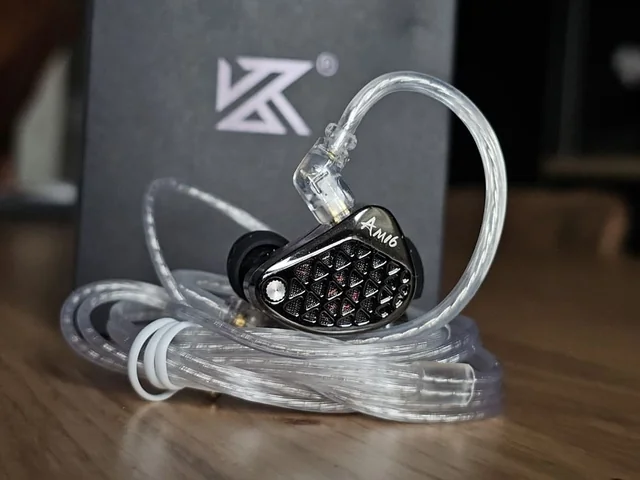
The packaging is minimal, but that’s standard for KZ. I actually like the clean presentation, though I still wish they would include their improved braided cable that came with the Sonata. The included one is functional but thin and lacks a chin slider. For most people it works fine, but I quickly swapped it for an upgraded cable to get a better feel and appearance. At this price though, I can’t complain too much. Everything you need to start listening is here.
KZ AM16 with cable
Build Quality and Design
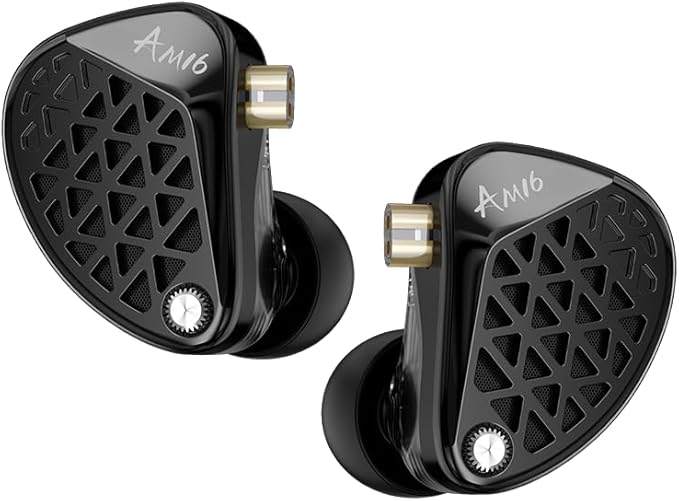
The AM16 feels solid and well constructed. Its body is made of high-quality resin with a dark metallic faceplate that gives it a professional and slightly industrial appearance. The faceplate features a triangular mesh pattern that resembles the design language seen on the KZ Zenith and Sonata, with a small silver screw on the front edge and the “AM16” name printed in white on the top. Through the translucent shell, you can actually see the eight balanced armature drivers neatly arranged inside.
Each side of the AM16 houses eight balanced armature drivers - one new 22955 driver for bass, one 29869 for mids, a dual 31736 for mid to lower treble, and four 30019 drivers handling the upper treble region. These drivers are channeled through an internal sound guide rather than being placed directly in the nozzle. The configuration delivers a smooth and cohesive output across the entire frequency range.
Specifications are impressive for this price range:
- Frequency response: 5 Hz to 45 kHz
- Impedance: 22 ohms
- Sensitivity: 104 dB
The IEM connects via KZ’s standard QDC 0.75 mm two-pin interface, and it’s terminated in a 3.5 mm plug. Comfort-wise, the AM16 is surprisingly good despite its larger shell size. It fits securely, provides strong passive isolation, and stays comfortable during long sessions. I have medium-sized ears, and the AM16 sits snugly without causing fatigue or pressure points. Some users with smaller ears might find it a bit large, but for me it’s one of the better-fitting all-BA KZ designs so far.
Sound Impressions
From the first few minutes, it was clear that the AM16 is tuned for fun. It carries KZ’s classic V-shaped profile - energetic bass, recessed mids, and a sparkling treble - but executed in a far more refined and cohesive way than their older models. It’s like KZ took their house sound, matured it, and gave it the technical ability that many of us always wanted from their BA sets.
Bass
The first surprise comes from the bass. For an all-balanced armature configuration, the AM16 delivers an astonishing low-end impact. The new 22955 driver gives the bass both body and texture, producing a response that mimics the punch and warmth of a good dynamic driver. The sub-bass reaches deep and carries real weight without bleeding into the mids. Notes hit fast, decay quickly, and never feel bloated.
In tracks like “Growing Up” by Mr FijiWiji, the low tones transition beautifully, and the kick drums sound tight and realistic. I was genuinely impressed by how natural the bass sounded for a BA setup. It’s clean, powerful, and fun - something I rarely say about multi-BA earphones.
Midrange
As expected from a V-shaped tuning, the midrange sits slightly behind the bass and treble. Yet the AM16 handles this region with surprising clarity. Male vocals sound articulate and free from muddiness, while female vocals come forward with energy and sparkle. Guitars, pianos, and strings retain good body and separation.
The tonality is mostly natural, though occasionally the upper mids can feel a bit forward, especially on high-energy tracks. That said, it never crosses into harshness. Vocals sound crisp and lifelike, with the kind of detail that keeps you engaged. Compared to older KZ models like the AS16 Pro, this is a major improvement in balance and realism.
Treble
Treble is where the AM16 truly shows its finesse. It’s bright but not piercing, detailed but not fatiguing. The upper frequencies extend beautifully, revealing micro-details and air around instruments without turning sharp. Cymbals shimmer naturally, violins soar without bite, and percussive sounds stay clean.
KZ tuned this set with a slight dip around 5 kHz and a controlled lift around 7 kHz, which gives it a sense of clarity and openness while avoiding the sibilance that plagued many earlier KZ models. The result is a smooth and engaging treble presentation that feels both exciting and controlled.
Technical Performance
The AM16 impresses with its imaging and layering. Instruments occupy their own space in the mix, and I can easily pinpoint where each sound is coming from. The soundstage is wide with good depth, creating a sense of openness rarely found in this price range. The all-BA configuration pays off in terms of speed and precision - notes attack quickly and decay naturally, giving complex tracks a sense of order and cleanliness.
Even when the music gets busy, the AM16 keeps up effortlessly. Whether it’s electronic music, rock, or orchestral recordings, it maintains separation and control, showing technical ability beyond its cost.
Comparisons
To really understand how far KZ has come, I compared the AM16 with a few other models from their lineup and beyond.
KZ AS16 Pro:
The AM16 easily surpasses it in refinement and coherence. The AS16 Pro has a brighter, more aggressive tuning with a thinner midrange and sharper treble peaks. The AM16 feels more natural and balanced, with better bass presence and improved overall tonality.
KZ Sonata:
The Sonata leans more analytical and treble-forward, while the AM16 shifts toward warmth and musicality. If you prefer a technical, detailed sound, the Sonata might suit you. But if you want a fuller and more engaging experience, the AM16 wins.
Letshuoer D02 (Dynamic Driver): The D02’s dynamic driver gives it a more physical sub-bass feel, but it lacks the clarity and separation of the AM16. The AM16’s imaging and control make it more versatile for critical listening, even if the D02 sounds slightly more natural in the lows.
Moondrop Aria:
The Aria is still one of the best single-DD sets around this price, but the AM16 competes surprisingly well. The Aria has smoother mids, while the AM16 has superior resolution and sparkle. For energetic genres or electronic music, I prefer the AM16’s livelier personality.
KZ AS10 Pro:
The AM16 feels like a direct evolution of this model. The sound is more controlled, with better low-end definition and a more mature tonality. It keeps that fun KZ character but adds refinement and detail that the AS10 Pro lacked.
Across all these comparisons, one pattern stands out: the AM16 consistently sounds more cohesive and engaging. It bridges the gap between fun tuning and serious performance better than any other KZ I’ve tried.
Who Is This For?
The KZ AM16 is ideal for listeners who want a musical, engaging sound without sacrificing detail. It’s for those who enjoy punchy bass and bright treble but dislike harshness or fatigue. Its efficiency makes it easy to drive from any device, though it scales a bit better with a quality DAC or portable amp.
If you’re coming from budget dynamic driver IEMs and want to explore the clarity and precision of balanced armatures, this is a perfect starting point. It’s also a great option for those who liked KZ’s classic fun tuning but always wished for a smoother and more refined execution.
I wouldn’t recommend it to strict neutral or reference listeners - this is not a flat studio monitor. It’s a set designed to make music enjoyable, colorful, and full of energy. Whether you listen to pop, electronic, rock, or orchestral, the AM16 delivers a lively yet detailed experience.
Conclusion / Final Verdict
After spending time with the KZ AM16, I can confidently say this is one of the best products KZ has released in years. It combines everything that makes KZ popular - energy, excitement, and value - with a new level of refinement and maturity. The all-balanced armature design proves that KZ can create a musical and natural-sounding IEM without relying on dynamic drivers.
The bass is rich and powerful, the mids are clear and balanced, and the treble brings air and sparkle without fatigue. The build feels sturdy, comfort is solid, and the overall tuning makes it enjoyable across many genres. It’s an IEM that invites you to rediscover your favorite tracks and enjoy them in a new light.
For around fifty to sixty dollars, the KZ AM16 is a triumph - a true return to form for KZ. It’s musical yet detailed, bold yet refined, and fun without compromise. If you’ve been waiting for a KZ that combines their classic sound with modern polish, the AM16 is exactly that. It’s the best all-BA IEM KZ has ever made and one I’ll happily keep in my collection.
Where to Buy
You can find the KZ AM16 on:
Affiliate Disclaimer: Listen Vibes may earn commissions from qualifying purchases that helps to maintain the website - at no extra cost to you.