KZ has released so many budget hybrids over the last few years that it takes something genuinely different to stand out. The KZ Duonic manages to do exactly that, not because it chases extreme detail or aggressive tuning tricks, but because it sounds unusually coherent for the price. Instead of overwhelming bass or sharp upper mids, the Duonic leans into a softer, smoother presentation that feels designed for long listening sessions.
What immediately makes the Duonic interesting is the way it balances its identity as a bass-oriented set without turning into a bloated mess. Compared to older KZ bass-focused models, I hear a cleaner and more controlled low end with less of the exaggerated slam that often masks the rest of the frequency range. The result is a tuning that still feels warm and full, but easier to live with across different genres.
The dual-driver configuration also gives the Duonic a slightly different character from the company’s usual budget offerings. There is a hybrid texture here that mixes a rounded dynamic-driver low end with a more spacious and airy upper presentation. Opinions differ on how successful that blend really is. Some listeners hear smooth treble with decent texture, while others find the upper mids slightly uneven or more energetic than expected. To my ears, the Duonic works best when treated as an easy-listening set rather than a detail monster.
At its price point, that approach makes a lot of sense. The Duonic feels aimed at people who want a comfortable everyday tuning that works from a smartphone, dongle DAC, laptop, or portable player without needing careful pairing or EQ adjustments. It is not trying to beat higher-end hybrids in technical precision. Instead, it focuses on musicality, warmth, and fatigue-free listening, and in that role it performs surprisingly well.
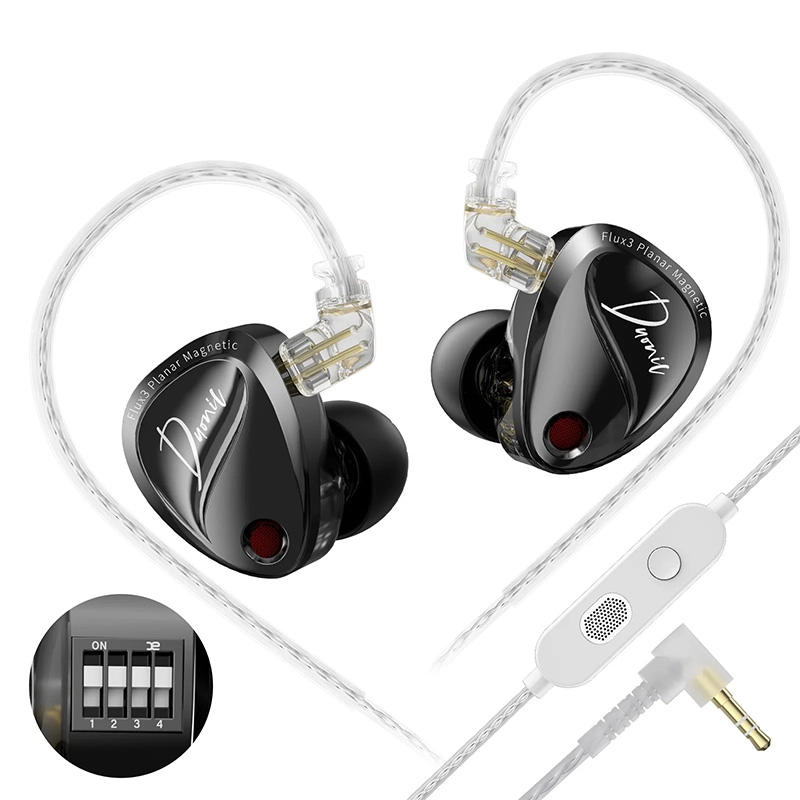
KZ Duonic
Unboxing and First Impressions
The unboxing experience is classic KZ. The Duonic arrives in the familiar compact black package that many of the company’s recent releases use. It is not luxurious, but it feels organized and functional. Opening the lid reveals the IEMs neatly seated in a cutout tray, while the accessories sit underneath a cardboard flap.
Inside the box, the included items are fairly minimal. You get the detachable cable, several sets of silicone ear tips, and the standard documentation. The accessories clearly reflect the aggressive budget pricing. The cable is serviceable but unimpressive, with the same lightweight feel that KZ has used on many entry-level models. It works fine for casual use, though it does not feel especially durable or premium.
The ear tips are probably the weakest part of the package. I found the included tips underwhelming both in comfort and seal consistency. Some listeners may have no issue with them, but tip rolling feels almost mandatory if you want to hear the Duonic at its best. A better set of aftermarket tips noticeably improves comfort and helps tighten the bass response.
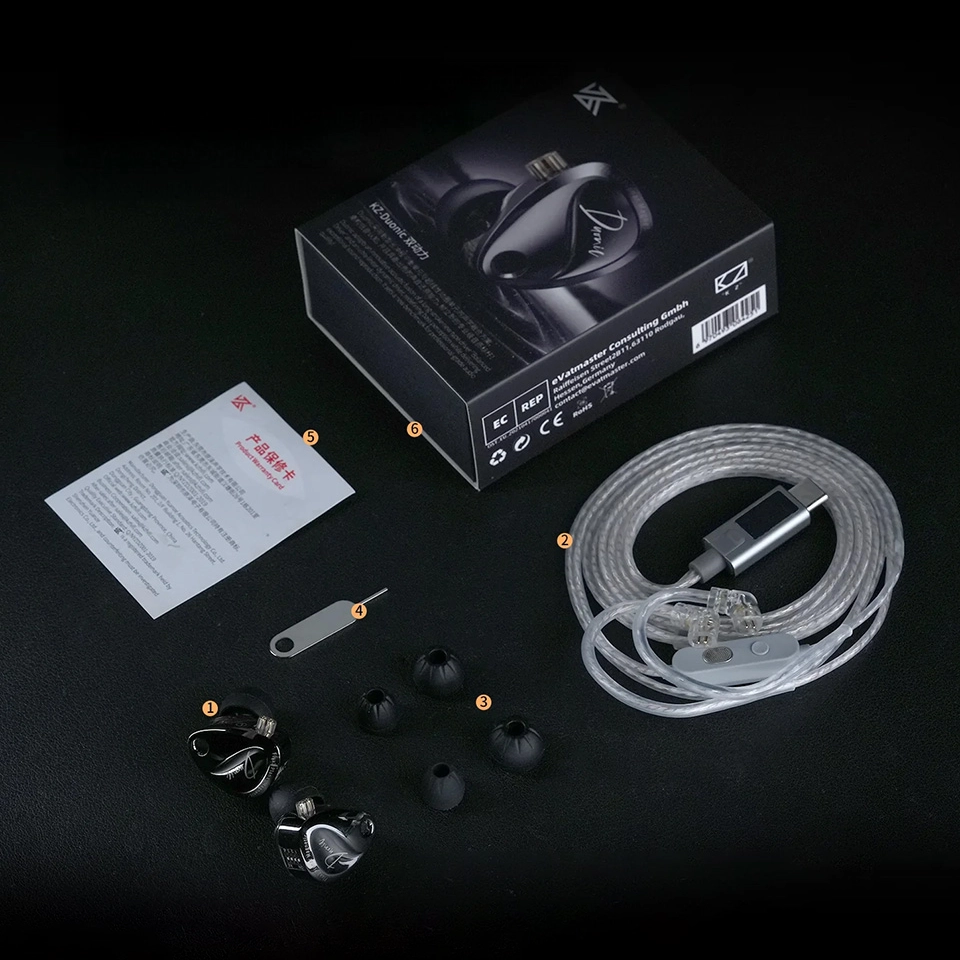
KZ Duonic Accessories
Build Quality and Design
The Duonic has one of the more attractive shell designs among KZ’s affordable hybrids. The overall shape resembles earlier models like the Castor and Krila, using a rounded triangular housing that fits naturally into the ear. Despite being labeled black, the finish looks more like a dark gunmetal color, which gives the earphones a slightly more mature appearance.
Build quality is solid overall for the price category. The shells feel sturdy in daily handling, and the lightweight construction helps comfort during longer sessions. Isolation is decent as well. External noise reduction is good enough for commuting or office use, and I do not hear major cable microphonics while walking.
The cable remains the weakest hardware element. It is perfectly usable, but it lacks the softness and premium feel that many competing budget IEMs now offer. Fortunately, the detachable design means upgrading the cable is easy if desired.
Sound Quality
The Duonic has a warm, smooth, and surprisingly relaxed tuning for a modern KZ hybrid. Instead of aiming for maximum clarity or exaggerated excitement, it focuses on coherence and easy listening. The presentation feels fuller and softer than many recent budget hybrids, yet it still maintains enough openness to avoid sounding congested.
There are tradeoffs, of course. The Duonic does not chase ultra-high resolution or analytical precision. Some listeners may find the upper mids too restrained, while others may notice occasional unevenness in the treble depending on source pairing and volume. Even so, I think the overall balance works because the tuning rarely becomes harsh or exhausting.
Bass
Bass is clearly one of the Duonic’s strongest qualities. The sub-bass reaches deep with satisfying rumble, but it avoids the bloated and overwhelming behavior that sometimes affects older KZ bass-focused sets. I hear a softer and more natural low-end presentation that prioritizes weight and musicality over raw aggression.
Midbass punch is strong enough to keep electronic music, hip-hop, and rock engaging, yet it stays relatively controlled. Compared to the older Castor bass variants, the Duonic sounds cleaner and more coherent to my ears. Instead of simply increasing quantity, it feels like KZ focused on improving how the bass integrates with the rest of the tuning.
Texture and definition are decent rather than exceptional. Bass notes have good body, though they are not razor-sharp in attack. Some listeners expecting extreme basshead impact may actually find the Duonic slightly restrained given its marketing direction. Personally, I think the tuning benefits from that moderation because it keeps vocals and instruments from getting buried.
Midrange
The midrange presentation is smooth, slightly relaxed, and positioned just behind the bass. Male vocals sound warm and natural, while female vocals carry a softer sweetness rather than aggressive forwardness.
This is also the area where impressions vary the most. I hear the mids as pleasantly non-fatiguing with enough clarity for casual listening, especially on acoustic tracks and softer vocal recordings. At the same time, there are moments where upper-mid energy can feel inconsistent depending on the track and source chain. Some people hear traces of sibilance or extra emphasis in the 2kHz to 5kHz region, but in my case I perceive the entire presentation as more laid-back.
To my ears, the Duonic generally avoids the shoutiness that affects many budget hybrids. Vocals do not jump aggressively forward, and instruments maintain a comfortable sense of distance. The downside is that microdetail and texture are only average. The Duonic is more about smooth musical flow than studio-monitor precision.
Treble
Treble follows the same relaxed philosophy as the rest of the tuning. I hear enough detail and air to keep the presentation from sounding dark, but the highs are clearly softened compared to brighter KZ models.
Cymbals and higher harmonics have a smoother edge that makes long listening sessions easier. There is less metallic sharpness than expected from a low-cost hybrid, which helps the Duonic avoid fatigue. At the same time, this softer treble approach slightly reduces perceived crispness and sparkle.
The Duonic also reacts noticeably to source pairing. Cleaner DACs help improve separation and treble definition, while warmer devices make the sound thicker and softer. Thankfully, it remains easy to drive from nearly anything.
Technical Performance
Technical performance is respectable but not class-leading. The Duonic prioritizes coherence and staging over hyper-detail retrieval. Imaging is actually one of its better qualities. Instruments are positioned with enough precision to create an enjoyable sense of space, especially on calmer tracks and smaller arrangements.
The soundstage feels larger than average for the price bracket, though it is not exceptionally holographic. During more complex passages, layering can flatten slightly and the presentation loses some separation. That limitation becomes noticeable in dense orchestral music or busy metal mixes.
Resolution sits firmly in the “good for the price” category. Fine details are present, but they are not pushed aggressively forward. Instead, the Duonic delivers a softer and more forgiving presentation where the overall musical picture matters more than analytical dissection.
For gaming or critical monitoring, there are sharper and more precise options available. For casual listening, commuting, streaming, and extended music sessions, the Duonic’s balance of spaciousness, warmth, and comfort works very well.
How It Compares
The most obvious comparison is the KZ Castor Bass lineup. The Duonic shares some of that family DNA, especially in the low-end emphasis, but I hear the newer model as more refined and controlled. Bass remains prominent, yet it integrates more naturally into the mix instead of dominating the presentation.
Compared to the Castor Bass, the Duonic sounds less aggressive and slightly more mature. The low end has better coherence, while the mids and treble feel smoother and less fatiguing. Listeners who wanted the Castor to be a little cleaner and more balanced will probably appreciate the Duonic.
At the same time, the Duonic is not necessarily the better choice for people chasing maximum excitement or raw impact. The softer tuning can occasionally make it feel less energetic, especially compared to brighter or more V-shaped KZ sets.
Against more technical budget hybrids, the Duonic trades detail retrieval for comfort and musicality. It does not try to impress with extreme separation or hyper-etched treble. Instead, it focuses on creating a relaxed presentation that stays enjoyable for hours.
The hybrid driver implementation also gives it a slightly different tonal flavor compared to KZ’s single dynamic-driver models. There is more spaciousness and openness in the upper range, though not everyone will agree on how natural the transition between drivers sounds. Personally, I think KZ handled the crossover reasonably well considering the price.
For listeners who prioritize easy listening over technical fireworks, the Duonic stands out as one of the more coherent recent KZ releases.
Is It Right for You?
The Duonic makes the most sense for listeners who want an affordable, warm, and forgiving IEM that works well across many devices and genres. I would especially recommend it to people who enjoy bass presence but dislike overly sharp treble or aggressive upper mids.
This is a very approachable tuning for casual listening. Pop, electronic music, lo-fi, hip-hop, softer rock, and vocal-heavy tracks all benefit from the Duonic’s smooth presentation. It is also a good match for long sessions because the relaxed treble reduces fatigue.
Bass lovers will probably enjoy the tuning, though extreme bassheads may actually want something more exaggerated. The Duonic focuses more on balance and control than sheer quantity. That makes it easier to recommend to a wider audience.
Listeners who prioritize technical detail, studio-style accuracy, or ultra-crisp imaging should probably look elsewhere. The Duonic is not trying to compete with analytical hybrids or brighter planar sets. Its strengths are coherence, comfort, and musicality.
It is also a good choice for people using smartphones, laptops, or simple dongle DACs. The Duonic is easy to drive and does not require expensive amplification to sound enjoyable. Pairing still matters somewhat, but it remains forgiving enough to perform consistently from modest sources.
For someone entering the hobby or looking for an inexpensive daily-driver IEM with a smooth tuning, the Duonic feels easy to recommend.
Final Verdict
The KZ Duonic succeeds because it avoids the usual budget-hybrid trap of trying too hard to impress in quick demos. Instead of exaggerated treble, overwhelming bass, or artificial detail boosts, it delivers a smoother and more coherent sound that stays enjoyable over time.
Its biggest strengths are the controlled bass response, relaxed treble, spacious presentation, and approachable tuning. The technical performance is not groundbreaking, and the included accessories leave plenty of room for improvement, especially the stock tips and cable. There are also moments where the upper mids and treble can sound slightly inconsistent depending on the source and track.
Even with those flaws, the Duonic feels refreshingly balanced for such an affordable release. It works well from almost any device, handles a wide range of music comfortably, and avoids the harshness that often affects low-cost hybrids.
Where to Buy
You can find the KZ Duonic on:
Affiliate Disclaimer: Listen Vibes may earn commissions from qualifying purchases that helps to maintain the website - at no extra cost to you.