It’s easy to dismiss budget hybrids as variations on the same theme, but every now and then something small shifts the conversation. The OoopusX Op.22 doesn’t try to reinvent the category outright, yet it introduces a feature that feels more meaningful than gimmicky: a physical bass tuning dial that genuinely changes how the earphone behaves.
At first glance, the Op.22 lands in familiar territory. A multi-driver hybrid setup, a lightweight shell, and a price that keeps expectations grounded. But the moment that tuning dial comes into play, it stops feeling like just another entry in an overcrowded segment. Instead of subtle tweaks that barely register, this dial creates two distinct listening experiences - one closer to a controlled, slightly elevated neutral, and another that leans into a more energetic, bass-forward presentation.
What makes it interesting isn’t just the presence of the feature, but how usable it is. I found that it invites experimentation depending on genre or mood rather than feeling like something you set once and forget. That alone gives the Op.22 a kind of flexibility that many competitors lack at this level.
Of course, flexibility doesn’t guarantee greatness. The rest of the tuning, technical performance, and build still have to hold up. The Op.22 aims to balance fun and usability, but it also carries a few compromises typical of its price range. The question is whether the tuning versatility and overall presentation are enough to push it beyond the usual expectations for a budget hybrid.
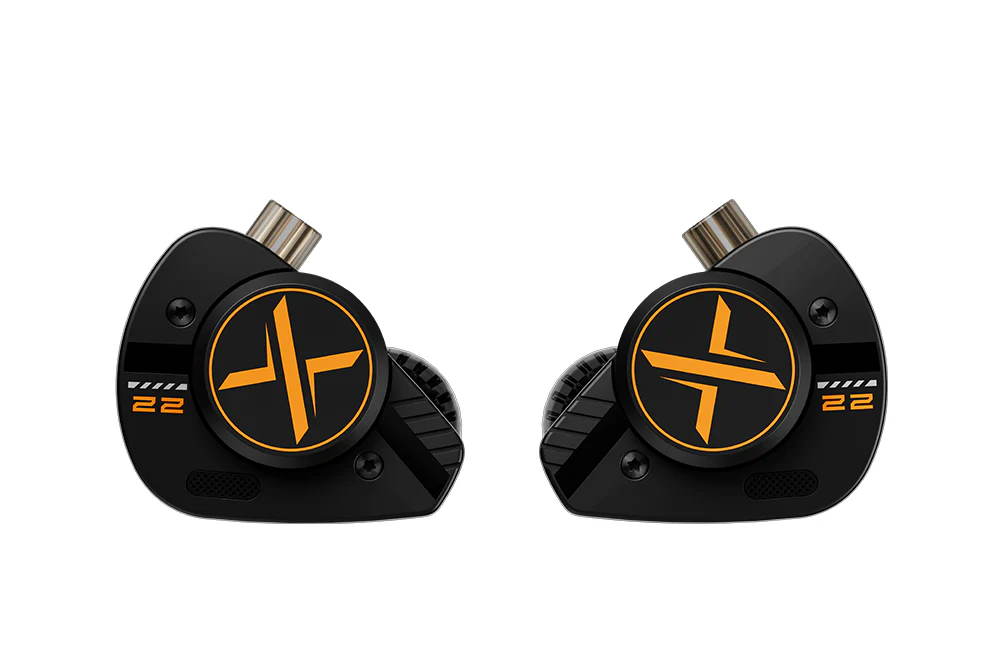
OoopusX Op.22
Unboxing and First Impressions
The unboxing experience is straightforward and functional, without trying to oversell itself. The packaging does its job, but it doesn’t create a strong first impression. Everything feels aligned with the price - nothing cheap to the point of concern, but nothing that stands out either.
Inside the box, the essentials are covered. There’s a selection of eartips, including standard silicone options and a stickier variant that provides a more secure seal. That second type ends up being surprisingly useful, especially for maintaining consistency in bass response. I also found that tip selection has a noticeable effect on how the upper mids and treble behave, which makes having options important.
The included cable uses a QDC-style connector. It works fine in practice, but it doesn’t feel particularly premium. It gets the job done without introducing obvious issues, though it lacks the refinement or flexibility I’d expect if build quality were a primary focus.
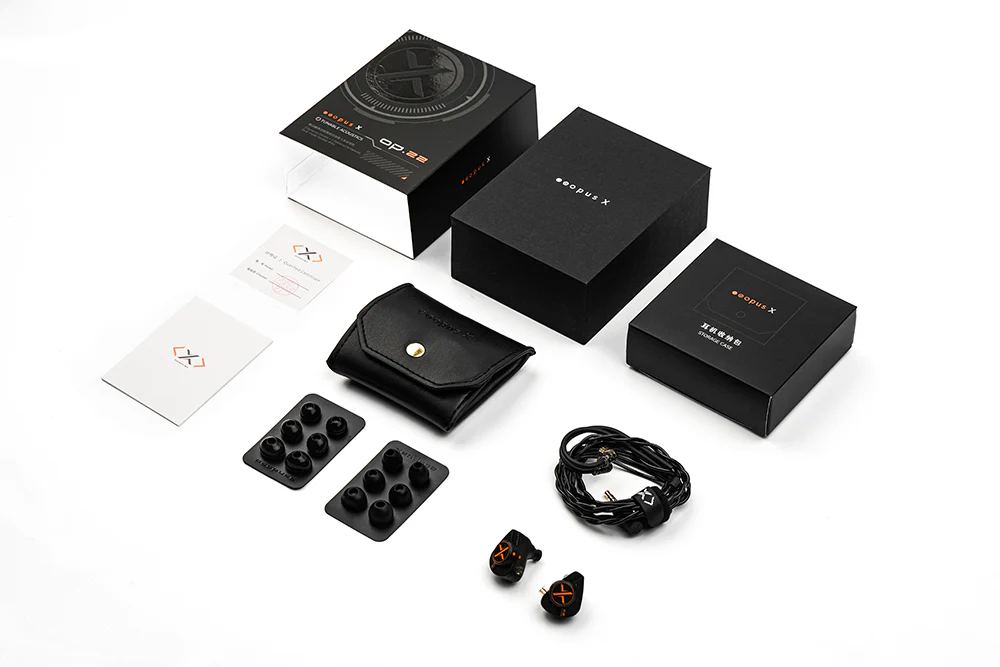
OoopusX Op.22 Accessories
Build Quality and Design
The design of the Op.22 is one of its more distinctive aspects. The matte black finish gives it a clean, understated base, but the overall aesthetic leans into a slightly futuristic, almost mechanical look. It feels more like a piece of modern tech than a traditional audio product, which helps it stand out in a crowded field of similarly shaped IEMs.
The standout feature is clearly the tuning dial integrated into the faceplate. This isn’t just a cosmetic addition - it’s functional, tactile, and easy to use. The dial has a defined feel when switching between modes, with enough resistance to avoid accidental changes but still smooth enough to adjust while wearing the earphones. That usability matters more than it might seem, because it encourages real-world use rather than treating the feature as a novelty.
Comfort is one of the stronger points here. The low weight helps the shells sit securely without causing fatigue over long listening sessions. However, the size of the housing is on the larger side due to the multi-driver configuration. For those with smaller ears, this could be a limiting factor, as the fit may feel a bit intrusive.
Sound Quality
The defining characteristic of the Op.22 is its dual personality. The tuning dial doesn’t just tweak the sound - it reshapes the low-end response in a way that makes the earphone feel like two different products. One mode leans toward a controlled, slightly elevated neutral, while the other adds a noticeable boost that shifts the presentation into a more energetic, fun direction.
Bass
The bass is easily the focal point of the Op.22. In its neutral setting, it sits slightly above neutral with a clean and controlled presentation. There’s good extension, and the texture comes through clearly enough to keep things natural. It doesn’t overwhelm the mix, which makes it suitable for more balanced listening sessions.
Switching to the bass mode introduces a significant increase - around 5 to 7 dB - and the difference is immediately obvious. The sound becomes punchier, heavier, and more engaging, especially for genres like electronic music, hip-hop, and pop. It adds impact without completely losing control, though it can occasionally bleed into the midrange depending on the track.
Despite the boost, it doesn’t quite reach the level of deep, subwoofer-like rumble. The emphasis is more on punch and weight than on subterranean extension. Some may find that slightly limiting, especially if they’re chasing a more visceral low-end experience.
Midrange
The midrange leans warm and natural, with a relaxed presentation that avoids pushing vocals too far forward. Male vocals come across as full and rich, while female vocals maintain a smooth, non-fatiguing character. It’s an easy listen, especially over longer sessions.
That said, this relaxed tuning comes with trade-offs. The midrange isn’t particularly energetic, and it can feel a bit subdued in terms of dynamics. There’s a sense of cohesion and musicality, but not a lot of excitement.
The upper mids are where things get more nuanced. In some cases, they add a sense of clarity and presence, giving the sound a bit of edge. In others, especially with certain recordings, that same region can introduce a slight sharpness or highlight sibilance. This is one of those areas where opinions differ - some will appreciate the added definition, while others may find it inconsistent.
Treble
The treble follows a generally safe tuning approach. It avoids harshness for the most part, with cymbals and higher-frequency elements coming through with enough detail to feel present without becoming aggressive.
At the same time, there’s a noticeable roll-off in the upper treble. Air and sparkle are somewhat limited, which gives the overall sound a slightly darker or more subdued character. For listeners sensitive to treble, this can be a positive, as it reduces fatigue. For others, it may feel like something is missing in terms of openness and extension.
There are occasional moments where the lower treble interacts with the upper mids in a way that can make certain vocals or cymbals feel more forward than expected. This doesn’t happen consistently, but it’s worth noting for those sensitive to that region.
Technical Performance
From a technical standpoint, the Op.22 delivers a solid but not standout performance. Imaging is decent, and the soundstage offers a reasonable sense of width, with average depth and height. It creates a believable space without reaching beyond its price bracket.
Separation is good enough to keep instruments distinct in most scenarios, but it doesn’t excel in more complex passages. Detail retrieval leans toward smoothness rather than sharp resolution, which aligns with the overall tuning philosophy.
In demanding tracks, there can be slight signs of strain, particularly in the higher frequencies, where things may sound a bit hazy. It’s not a constant issue, but it highlights the limitations of the technical performance.
Overall, the Op.22 prioritizes musicality and flexibility over analytical precision. It’s not designed to dissect recordings, but rather to provide an enjoyable and adaptable listening experience.
How It Compares
Placed against other budget hybrids, the Op.22 stands out less for raw performance and more for its versatility. Many IEMs in this range aim for a single tuning identity, whether that’s neutral, V-shaped, or warm. The Op.22 offers two distinct low-end profiles, and that alone changes how it competes.
In its neutral mode, it feels closer to a balanced tuning with a slight warmth, making it comparable to other entry-level hybrids that aim for a safe, all-rounder signature. The difference is that it doesn’t fully commit to being analytical or reference-oriented. It stays on the musical side, even when dialed back.
Switching to bass mode shifts it into a more fun-oriented category. Here, it competes with bass-boosted alternatives that prioritize impact and engagement. The advantage is that the Op.22 can move between these roles without requiring a second pair of earphones.
Technically, it doesn’t outperform strong competitors in the same price range. Some alternatives offer sharper detail or better layering. Where the Op.22 pulls ahead is in how it keeps you engaged. There’s a certain ease to the presentation that encourages longer listening sessions.
The design also gives it a bit of personality compared to more generic-looking models. While many IEMs in this bracket blend together visually, the Op.22’s aesthetic and functional dial make it more memorable.
It’s not a category leader in any single metric, but it offers a combination of features and tuning flexibility that few others match at this price.
Is It Right for You?
The Op.22 makes the most sense for listeners who value flexibility and ease of listening over technical precision. If the idea of switching between a more balanced tuning and a bass-heavy profile appeals to you, this is exactly the kind of product that delivers on that promise.
It works particularly well for casual listening across a wide range of genres. The bass mode adds energy to electronic, hip-hop, and pop tracks, while the neutral mode keeps things controlled enough for acoustic, vocal-focused, or lighter material. That adaptability makes it a strong everyday option.
Comfort is another reason to consider it, especially for longer sessions. The lightweight design helps reduce fatigue, though those with smaller ears may want to be cautious due to the shell size.
On the other hand, it’s not the best fit for listeners who prioritize detail retrieval, analytical listening, or highly resolving sound. The technical performance is solid but doesn’t reach the level needed for critical listening.
For someone looking for a versatile, musical, and user-friendly IEM with a genuinely useful tuning feature, the Op.22 fits the bill.
Final Verdict
The OoopusX Op.22 succeeds by doing something many products attempt but few actually achieve: it makes its headline feature matter. The bass tuning dial isn’t a gimmick - it’s a practical tool that meaningfully changes the listening experience.
Beyond that, the sound signature leans into a warm, relaxed, and musical presentation that’s easy to enjoy over long sessions. It doesn’t chase technical dominance, and it doesn’t try to impress with aggressive tuning. Instead, it focuses on balance, flexibility, and accessibility.
For anyone looking for an affordable IEM that prioritizes enjoyment and adaptability, the Op.22 is an easy recommendation. It may not be the most technically impressive option, but it’s one of the more engaging and versatile choices in its class.
Where to Buy
You can find the OoopusX Op.22 on:
Affiliate Disclaimer: Listen Vibes may earn commissions from qualifying purchases that helps to maintain the website - at no extra cost to you.