The Roseselsa Star City 5 Pro is an interesting IEM because it refuses to chase the safest tuning in its price range. Instead of going for a thick, relaxed presentation, it leans toward clarity, energy, and a brighter character while keeping enough mid-bass weight to avoid sounding thin. That makes it a more distinctive proposition than the typical budget set, but also one that will not suit every listener.
Roseselsa Star City 5 Pro
What makes the Star City 5 Pro especially appealing to me is the combination of its small footprint, unusual construction, and lively presentation. It is not trying to be a warm bass monster or an ultra-smooth all-rounder. Instead, it occupies a brighter, more energetic space, with particularly engaging vocals and enough technical ability to make the presentation interesting. The catch is that its upper-midrange and treble can become demanding with certain recordings, especially at higher volumes. That tension is ultimately what defines this IEM.
Unboxing and First Impressions
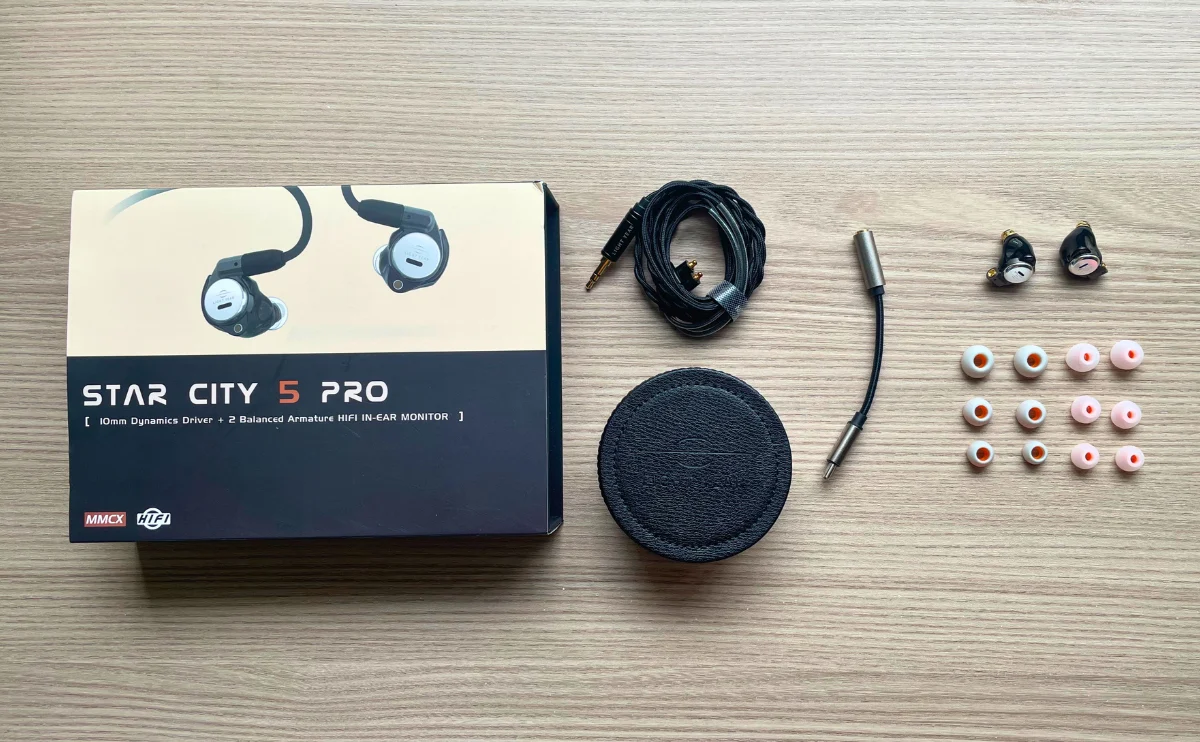
The Star City 5 Pro makes a good first impression with packaging that feels more elaborate than its price suggests. The outer paper sleeve has a technical aesthetic, and underneath it is a matte-black magnetic box. Opening the box reveals the IEMs and carrying case seated in foam, along with a sheet containing the technical specifications.
The accessory package is one of the stronger aspects of the product. A carrying case is included, with a modern faux-leather exterior that has a look reminiscent of cases used with some higher-end Dunu products. There is also a dongle supplied by Rose. The package is generous enough that the Star City 5 Pro feels like a complete setup rather than an IEM that requires several immediate upgrades.
There are some compromises. The case does not have an internal mesh compartment for storing tips, and it has been described as particularly difficult to open. The stock tips are also not universally convincing, with some fitting poorly on the nozzle. For this IEM in particular, experimenting with tips is worthwhile, and wide-bore tips have been recommended to complement its tuning.
Roseselsa Star City 5 Pro Accessories
Build Quality and Design
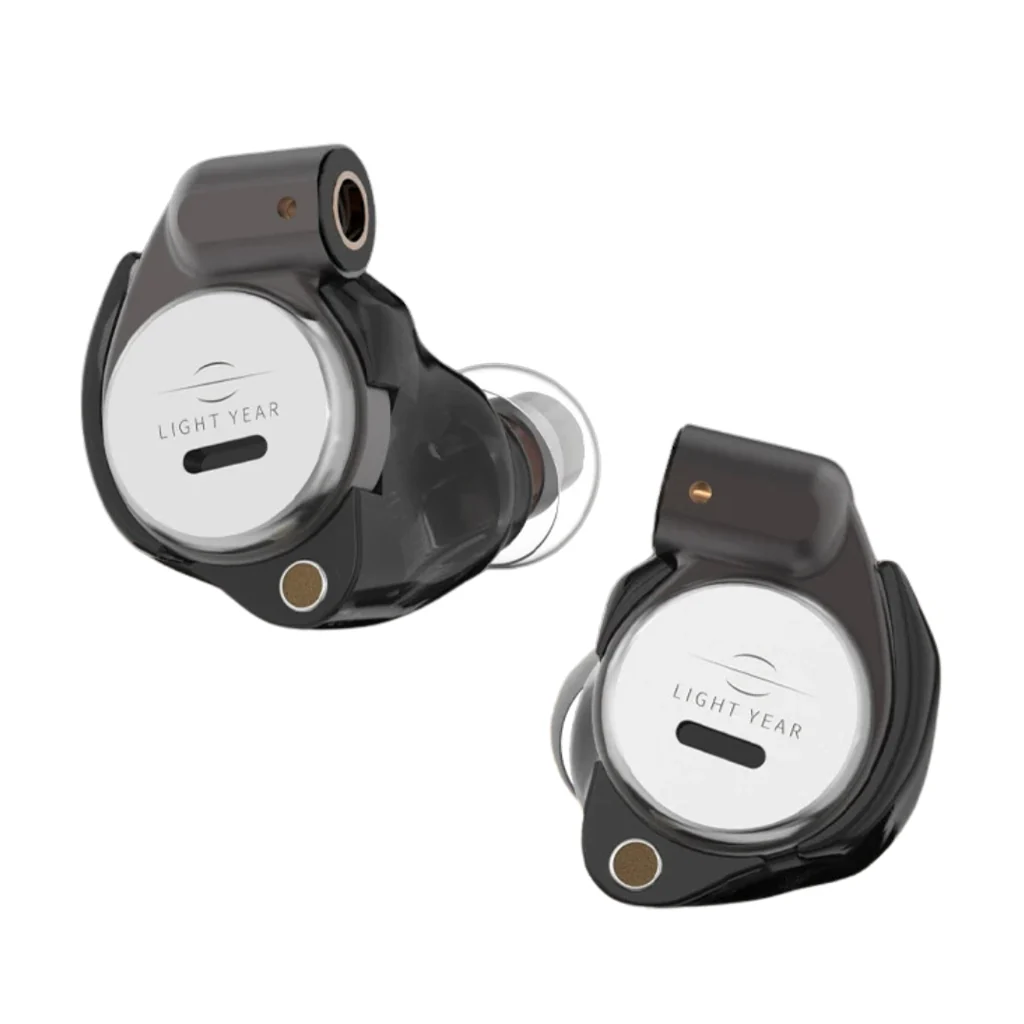
The Star City 5 Pro is one of those IEMs that immediately stands apart visually. Its shell combines polymer/resin with aluminum elements around the rear plate and vents, giving it a distinctive appearance rather than another generic resin-shell design. The D-SLA printed resin chamber and CNC stainless-steel rear cavity add an interesting technical element to the construction as well.
The shell is compact, and that small footprint is one of its strongest practical advantages. I found the overall design language particularly appealing because it manages to look technical without becoming unnecessarily flashy. The shape is unusual enough to have its own identity, and the construction has been characterized as unique even when compared with the Rose Technics Quiet Sea.
Comfort is more complicated. The shell shape and size are generally favorable, and one assessment specifically praised its small footprint and comfort. However, opinions differ here because the pronounced area around the MMCX connector can potentially cause discomfort for people with smaller or deeper ears. That means I would not assume that the otherwise compact shell will fit everyone equally well.
The cable is another minor compromise. It is non-modular, although that is hardly a deal-breaker at this level. The MMCX implementation has also received some criticism for how well the connector integrates into the shell. Still, taken as a whole, the Star City 5 Pro offers a compelling combination of unusual design, compact dimensions, and solid construction. There is also a 2-pin version, so you can choose MMCX or 2-pin before buying it.
Sound Quality
The Star City 5 Pro has a bright-leaning, energetic presentation that gives vocals and upper-frequency detail plenty of attention. It is not warm, dark, or heavily bass-focused. Instead, I hear a relatively balanced foundation with an emphasis on clarity and presence, making the IEM particularly interesting for rock, vocals, electronic music, rap, and J-pop. The exact balance can be somewhat sensitive to tips and recordings, so I would not treat it as a universally forgiving tuning.
Bass
The bass is controlled rather than dominant. Mid-bass has a punchy, fast character and enough physicality to keep guitars, drums, and piano from becoming anemic. At the same time, it generally stays out of the way of the midrange rather than becoming muddy. I particularly like this approach for rock and electronic music because the bass has enough drive to provide rhythm without turning the entire presentation into a thick, bass-heavy sound.
The Star City 5 Pro is not aimed at bassheads. The mid-bass is punchy, but the sub-bass could use more lift. I would therefore choose it for bass quality and speed rather than sheer quantity.
Midrange
The midrange is arguably the Star City 5 Pro’s strongest area. Vocals have presence, and female vocals in particular can sound expressive, precise, and emotionally engaging. Male vocals also retain useful body without becoming obviously thin or nasal. This is a presentation that works well when the singer needs to remain clearly in front of a busy arrangement.
At the same time, the upper-midrange may have some divergent opinions. The same energy that makes vocals exciting can become shouty with certain hotly mastered rock and metal recordings, especially when listening loudly. I would therefore be more careful with volume than I would be with a darker, smoother IEM. The Star City 5 Pro rewards well-produced material but can expose aggressive mastering rather quickly.
That character works particularly well with vocal-heavy rock. Recordings from artists such as Halestorm can showcase the IEM’s ability to keep powerful vocals extended and prominent without necessarily becoming harsh. For listeners who value vocal presence, this is one of the more convincing parts of the tuning.
Treble
Treble is where the Star City 5 Pro becomes more polarizing. It has an extended and articulated top end, which contributes to its sense of clarity and openness. I like the added energy when the recording is well behaved, because guitars, percussion, and vocal overtones remain lively rather than becoming dull.
The treble is one of the more divisive aspects of the Star City 5 Pro for me. I find its extended, articulate presentation adds plenty of clarity and energy, but I can also hear a slight unnaturalness around the upper-midrange and lower-treble transition, particularly with some recordings. At the same time, I think this tuning can work very well for listeners coming from brighter budget IEMs. If you are sensitive to treble, I would approach the Star City 5 Pro with some caution, although a small EQ adjustment around 4 kHz and 7 kHz can easily tame the more aggressive areas.
Technical Performance
I find the Star City 5 Pro technically capable for its tuning. The soundstage has good width and height, but what stands out to me more is the sense of depth. Imaging and separation are also convincing, helping individual elements maintain their own space without making the presentation feel artificially spread out. I would not call it the most technically impressive IEM in its class, but I think it performs very well considering its overall tuning.
The Star City 5 Pro is not particularly difficult to drive at 24 ohms and 104 dB/mW, and I can get a good level of performance from a simpler source. However, I find that it benefits from a clean and competent source. With something like the Shanling UP4, I get more richness through the midrange and a better sense of depth, while the FiiO K11 brings even more authority, dynamics, and weight to the presentation. A powerful desktop source is clearly overkill, but the Star City 5 Pro does respond well to better amplification.
How It Compares
The most useful comparison is not necessarily with one specific competing IEM, but with the kind of tuning the Star City 5 Pro represents. It sits firmly away from warm, bass-heavy sets. If I were choosing between it and a more relaxed budget IEM, I would pick the Star City 5 Pro when vocals, clarity, and energetic upper frequencies matter more than maximum bass quantity.
The Roseselsa Quiet Sea is also relevant because the Star City 5 Pro shares some of its design philosophy and visual character. The packaging and shell have been directly compared with the Quiet Sea, while the Star City 5 Pro’s carrying case has a similarly modern aesthetic to cases seen with some Dunu models.
For listeners coming from brighter budget sets such as the 7Hz Zero, the Star City 5 Pro has been viewed as a potentially worthwhile upgrade while retaining a bright-neutral direction. The difference is that the Star City adds a more distinctive physical design and a fuller, more engaging midrange.
I would also keep expectations realistic about amplification. A capable dongle is enough for this IEM; a powerful desktop source is not necessary. The FiiO K11 has more than enough power, while a phone can still preserve much of the Star City’s basic tonal and dynamic character, albeit without the same sense of authority.
Is It Right for You?
The Star City 5 Pro makes the most sense for listeners who want an energetic, vocal-forward IEM rather than a bass-first tuning. If I mainly listened to hard rock, alternative rock, vocal recordings, electronic music, rap, or J-pop, I would find its presentation particularly attractive. The combination of punchy mid-bass, expressive vocals, and extended treble gives these genres plenty of energy. The source material in the listening evidence also spans big-room house, hard rock, alternative rock, acoustic vocals, rap, Serbian rap, and anime-oriented J-pop, which fits the IEM’s versatile but lively character.
I would be more cautious if I were highly treble-sensitive or if I primarily wanted a warm, dark, relaxed presentation. The Star City 5 Pro is not for heavy bassheads, and its upper-midrange can become aggressive with certain recordings at higher volumes. Its isolation is also not a strong point, making it less attractive for very noisy environments such as busy city centers.
Tip rolling is worth considering. Wide-bore tips have been recommended for its tonality, and different tips can change how the upper treble is perceived. For the right listener, that flexibility helps make the Star City 5 Pro easier to tailor without fundamentally changing what makes it interesting.
Final Verdict
The Roseselsa Star City 5 Pro is an IEM with a clear personality. Its compact and unusual shell, hybrid driver configuration, punchy mid-bass, expressive midrange, and energetic treble make it much more interesting than a generic safe-tuning budget set. I especially like the way it approaches vocals: female voices can sound precise and emotionally charged, while male vocals retain enough body to avoid becoming thin.
It is not perfect. The bass will disappoint anyone looking for a genuinely powerful low end, the upper-midrange and treble can become intense with certain recordings, and comfort around the MMCX area may depend heavily on ear shape. The technical performance is also a point where opinions differ, ranging from simply above average to very good for the tuning.
Even with those caveats, I think the Star City 5 Pro deserves attention from anyone who prefers clarity, vocal presence, and energetic detail over warmth and bass quantity. It is an especially appealing choice for rock, electronic music, vocals, rap, and J-pop. If that sounds like your listening style, the Star City 5 Pro is a distinctive and compelling option rather than just another budget hybrid.
Where to Buy
You can find the Roseselsa Star City 5 Pro on:
Affiliate Disclaimer: Listen Vibes may earn commissions from qualifying purchases that helps to maintain the website - at no extra cost to you.