When I first laid ears on the Tanchjim Origin, I immediately sensed something special. This wasn’t just another single dynamic driver IEM chasing trendy tuning curves. It had poise, character, and a sonic maturity that spoke volumes. After spending weeks testing it with different sources, cables, and genres, I’m finally ready to share my full impressions. Let’s dive deep into what makes the Origin a standout in today’s crowded IEM market.
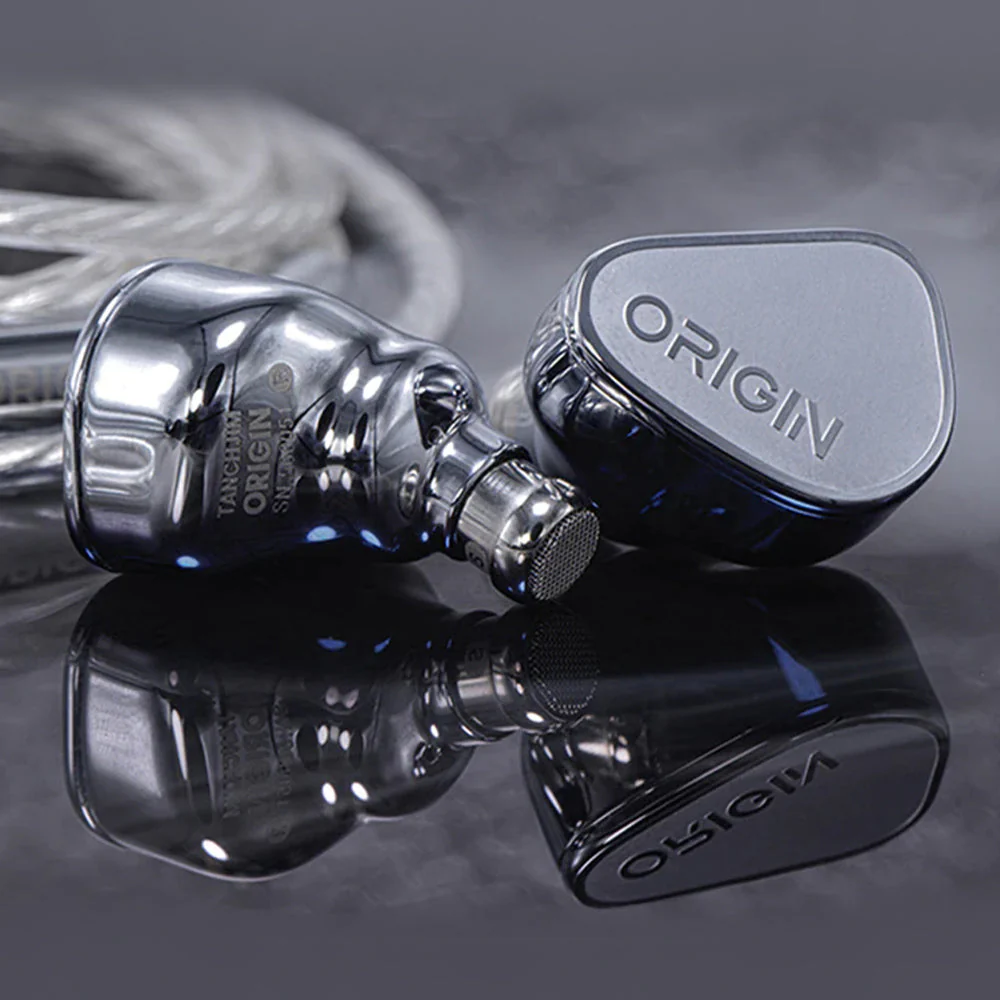
Tanchjim Origin
Inside the Box - A Complete Package
Unboxing the Tanchjim Origin was an experience in itself. Tanchjim clearly understands how to present a premium product. The packaging is clean and elegant, and inside I found everything I needed to get started:
- A solid, white leather-textured carrying case with plenty of space
- The Origin IEMs in polished stainless steel shells
- A 0.78mm 2-pin silver-plated copper cable terminated in 3.5mm
- Six pairs of ear tips - three wide bore and three narrow bore in sizes S, M, and L
- Three sets of interchangeable tuning nozzles (Standard, Dynamic, Light)
- A metal nozzle holder
- Manual and documentation
Everything felt thoughtful, from the organized layout to the solid feel of each accessory. It felt like I was opening something meant to last.
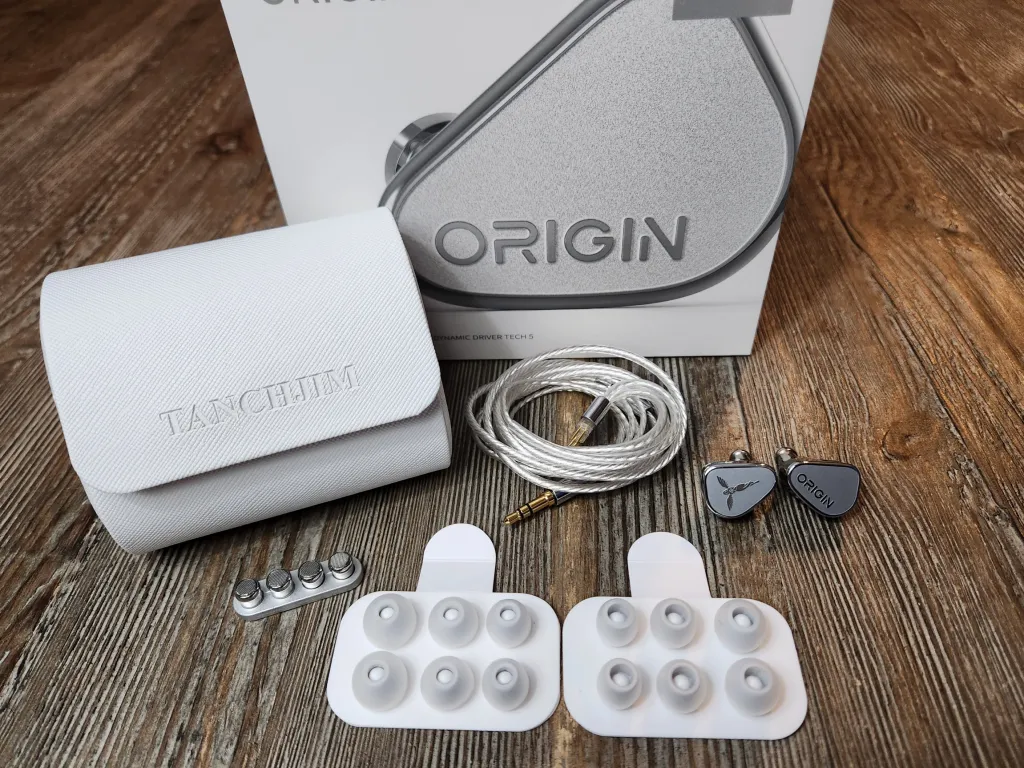
Tanchjim Origin Accessories
Design and Build - Elegant and Sturdy
The Tanchjim Origin follows the design language of its predecessor, the Oxygen, but with refined details and upgraded internals. The chassis is all stainless steel, highly polished with laser-etched logos - the left housing features the model name and the right has Tanchjim’s signature angel motif. It’s absolutely gorgeous, though prone to fingerprints and micro-scratches due to the mirror finish.
The build feels premium and durable. The shells are medium-sized, not too bulky, and the nozzle is longer than the one found on the Oxygen, which drastically improves the fit. Paired with the right tips, I was able to get a secure seal and solid passive noise isolation. Comfort is great for longer sessions, though the weight of the shells might be noticeable for smaller ears.
The stock cable is well-made and light, but a little thinner than I would have preferred. Still, it’s flexible, tangle-resistant, and pairs aesthetically with the IEMs.
Sound Performance - Controlled, Balanced, Engaging
The Tanchjim Origin uses the brand’s latest DMT5 10mm dynamic driver, a dual-magnetic, dual-cavity design that pushes resolution and tonal accuracy to new levels. With an impedance of 16 ohms and a sensitivity of 126 dB, it’s easy to drive even from smartphones, but scales beautifully with better sources.
Across all listening sessions, the Origin maintained a neutral-to-balanced sound signature, slightly warm in the mids with a tastefully lifted mid-bass and a smooth yet extended treble. It’s a tuning that walks the line between reference-grade clarity and musicality.
Bass - Punch Over Rumble
The Origin’s bass is focused more on mid-bass punch than sub-bass rumble. It’s clean, tight, and well-controlled, with just enough weight to give music body without bloating into the mids. The attack is natural, slightly soft around the edges, which gives the bass a thumpy, analog feel. Decay is quick enough to avoid smearing, making it perfect for genres like rock, acoustic, and jazz.
Sub-bass is present but not dominant. If you’re a sub-bass lover or listen to a lot of EDM or trap, you might find it a bit reserved. Personally, I found the bass more about texture and realism than sheer quantity - a mature take that fits its overall tuning philosophy.
Midrange - The True Star
Vocals and instruments shine beautifully on the Origin. The midrange has a natural warmth and clarity that feels organic, never sterile. Male vocals sound full and slightly forward without being chesty, while female vocals float with a delicate openness that’s expressive and textured.
I was especially impressed by the way the Origin handled acoustic guitars, strings, and piano. Everything sounded tonally correct with just the right amount of timbral nuance. The upper mids rise smoothly toward the 3kHz region, giving vocals presence and air without veering into shouty territory. Even when I pushed the volume, it never felt harsh or fatiguing.
Treble - Smooth with a Hint of Sparkle
The treble is finely tuned for detail and air without aggression. There’s a small dip around 4-5kHz to tame any potential harshness, followed by a lift near 7-8kHz that adds sparkle and openness. Cymbals, violins, and high-pitched vocals come through with finesse, never biting or sounding sibilant.
If you love ultra-bright or analytical treble, the Origin may feel a touch polite. But for long listening sessions, this smooth and airy top end offers a non-fatiguing and highly refined experience. I found the treble performance ideal for vocal and acoustic genres, while still detailed enough for orchestral and instrumental music.
Soundstage and Technical Performance
The Origin presents a moderately wide and natural soundstage. It’s not the most expansive IEM I’ve heard, but it feels immersive and well-placed. Instruments are well separated, and imaging is precise, allowing me to pick out layers in complex arrangements.
What truly impressed me was the microdetail retrieval. Subtle nuances in vocal breaths, string vibrations, and ambient reverb were easy to pick out. The DMT5 driver performs exceptionally in technicalities, making the Origin one of the best single DD IEMs I’ve used in this price range.
Tuning Filters - Subtle but Real
Tanchjim includes three tuning nozzles labeled Standard, Dynamic, and Light. Some reviewers say they don’t make a difference - but I disagree. The changes are subtle, yes, but audible if you listen carefully.
- Standard nozzle (S): Balanced-neutral tuning with a natural midrange, punchy bass, and airy treble. This is my preferred option for most genres.
- Dynamic nozzle (D): Adds a bit more mid-bass and warmth, with slightly smoother upper mids. Best for jazz, rock, or male vocals.
- Light nozzle (L): Slightly tighter bass, brighter upper mids, and more energetic treble. Brings out female vocals and strings beautifully.
The differences are not dramatic, but enough to let me tailor the sound to mood and genre. They’re worth experimenting with, especially if you enjoy vocal or acoustic music.
Comparisons - How Does It Stack Up?
vs. Moondrop Kato
The Origin has a more resolving and dynamic presentation. Kato is smoother but can sound blander. Origin wins in vocal clarity and overall technical performance.
vs. Simgot EA1000
EA1000 offers a more colored and punchier low end but can be fatiguing in the treble. Origin is smoother, more natural, and better for long listening sessions.
vs. 7Hz Timeless
The planar nature of the Timeless gives it an edge in speed, but the Origin sounds more organic and grounded, especially in the mids. The Origin is more emotionally engaging.
vs. Tanchjim Oxygen
The Oxygen still holds up well, but the Origin refines the formula with a smoother treble, slightly more mid-bass, and better ergonomics. I consider it a worthy successor.
Who Should Get the Tanchjim Origin?
The Origin isn’t a basshead’s dream or a bright treble enthusiast’s go-to. It’s designed for those who value balance, resolution, and timbre. If you love vocals, acoustic instruments, or live recordings, you’ll appreciate what this IEM brings to the table.
It’s perfect for:
- Vocal lovers (both male and female)
- Acoustic and jazz fans
- Audiophiles who want a refined, neutral presentation
- Listeners who appreciate detail and realism over exaggerated tuning
- Anyone upgrading from mid-tier IEMs looking for a mature signature
It may not be ideal for:
- EDM or sub-bass-heavy genres
- Those who prefer exaggerated V-shaped sound signatures
- People with small ears (due to shell weight and nozzle size)
Final Thoughts - A Subtle Masterpiece
The Tanchjim Origin is one of the most refined IEMs I’ve had the pleasure of using in the under 300 dollar range. It doesn’t scream for attention, nor does it try to wow with exaggerated bass or treble. Instead, it earns your respect with its restraint, balance, and effortless musicality.
From its tasteful design and build to its smooth, natural tonality and excellent technical performance, it’s clear that Tanchjim poured their heart into the Origin. Whether I’m listening to Fleetwood Mac, Norah Jones, Tool, or Chopin, this IEM never fails to deliver a clean and emotional experience.
If you’re looking for a mature, vocal-focused IEM with just enough warmth and sparkle to keep things interesting, the Origin deserves a serious spot on your shortlist.
Where to Buy
You can find the Tanchjim Origin on:
Affiliate Disclaimer: Listen Vibes may earn commissions from qualifying purchases that helps to maintain the website - at no extra cost to you.