The TRN Dolphin is the kind of budget IEM that makes the usual price expectations difficult to maintain. At roughly the $20 - 30 level depending on market and configuration, it combines an unusually polished metal design with an energetic, broadly balanced sound and technical performance that can feel out of place in such an inexpensive product. This is not simply a case of being acceptable for the money; the Dolphin has enough character and capability to remain interesting even when price is temporarily removed from the equation.
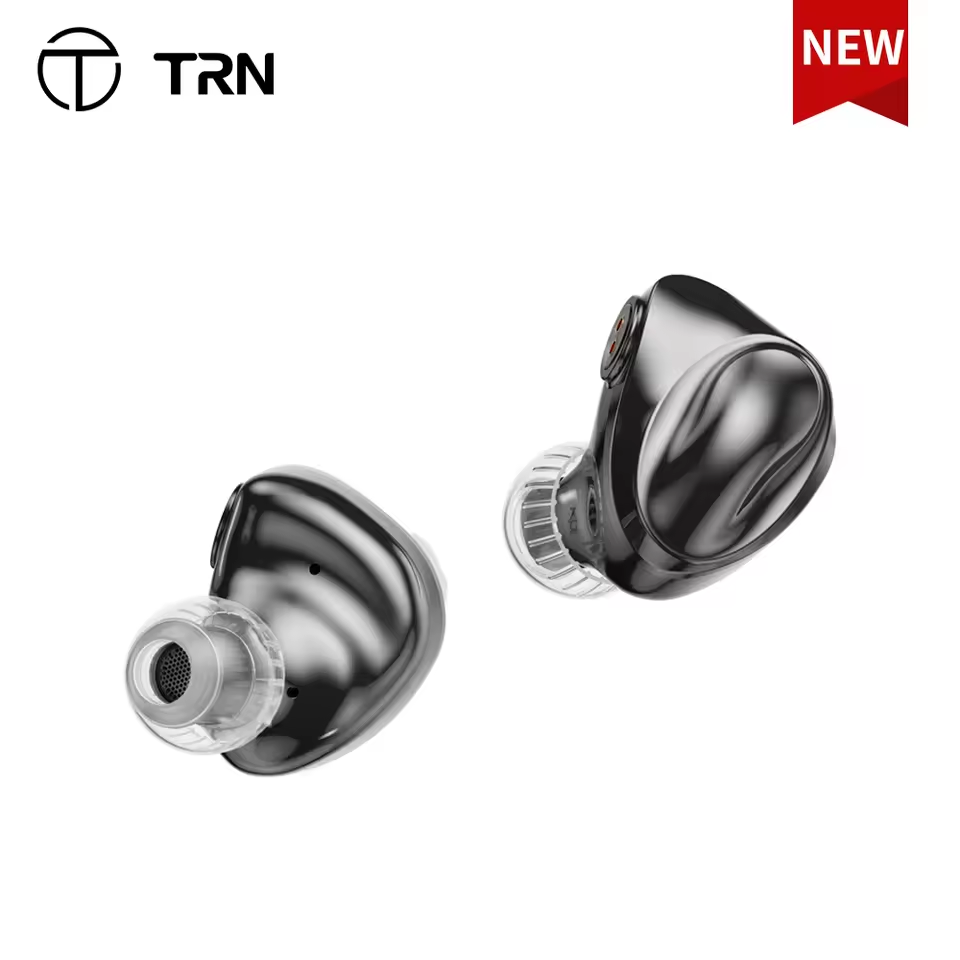
TRN Dolphin
Its overall tuning leans toward a mild V-shape, with a clean and lively presentation rather than a warm or relaxed one. Bass has real presence without consistently overwhelming the midrange, while the upper frequencies bring plenty of clarity, air, and perceived detail. That energetic approach is also the Dolphin’s main caveat: listeners sensitive to treble may find it more aggressive than they want, particularly at higher volumes.
What interests me most is how the Dolphin combines its energetic tuning with impressive separation and micro detail. I can easily pick out individual elements in busy recordings, and small details come through with surprising clarity for an IEM at this price. The presentation feels clean and well organized rather than congested, giving the Dolphin a level of technical performance I would normally expect from something more expensive. Add the distinctive metal shells, lightweight and comfortable construction, and modular cable, and the Dolphin feels less like a disposable entry level IEM and more like a genuinely competitive budget option.
Unboxing and First Impressions
The unboxing experience is one area where the Dolphin’s aggressive pricing becomes more obvious. The presentation is functional rather than luxurious, and the accessories do not receive the same attention as the earphones themselves. Small accessories packaged in opaque white plastic bags can be frustrating because their contents are not immediately visible, and the bags need to be torn open rather than conveniently resealed.
I would have liked to see a simple hard shell EVA case included, even if that required a small increase in price. It would make the package feel more complete and provide something useful for carrying an IEM that otherwise works particularly well as a travel or backup set.
The cable is a much stronger part of the package. It is a decent cable with a modular termination system, which is an unusually welcome feature at this price. There is one complication: some packages may apparently include only a single termination despite the cable itself being modular, so the exact configuration matters when buying.
Overall, I would describe the unboxing as adequate rather than memorable. TRN has clearly concentrated more of the budget on the Dolphin itself, and considering the quality of the shells and sound, that is a compromise I can accept.
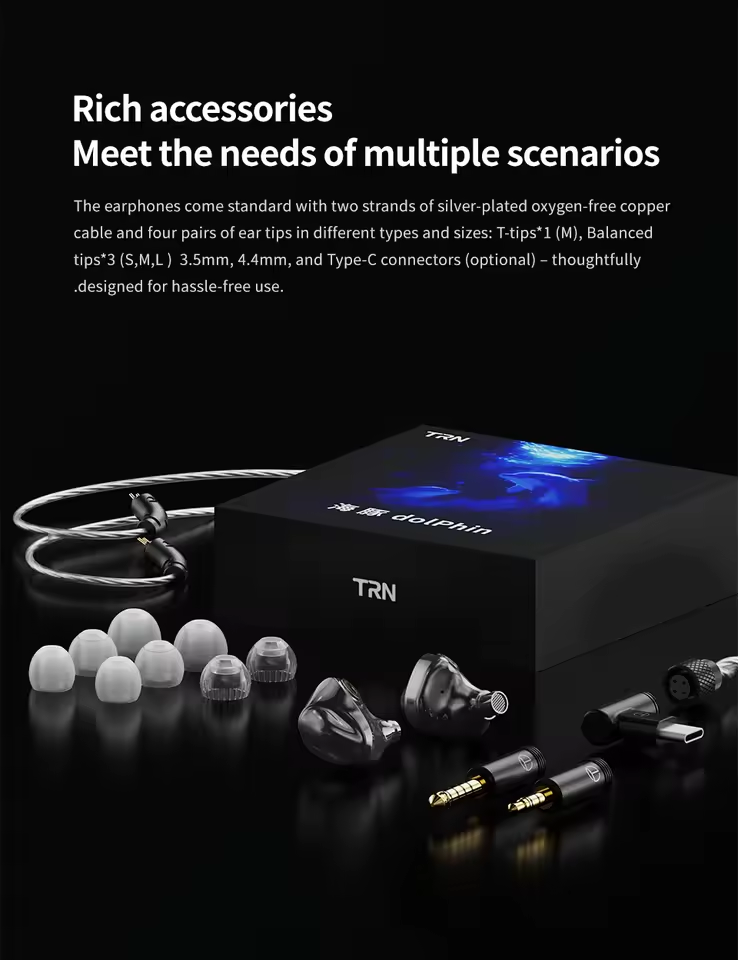
TRN Dolphin Accessories
Build Quality and Design
The Dolphin immediately makes a stronger impression once it is out of the packaging. Its polished metal construction gives it a considerably more expensive appearance than its budget positioning suggests. The CNC machined shells have a sculpted form inspired by a dolphin’s fin, giving the design some personality without resorting to excessive decoration. The result is clean, simple, and sleek.
The metal construction also provides a satisfying sense of solidity, yet the shells remain relatively light. That combination matters because an IEM can look impressive and still become unpleasant during longer listening sessions if its weight or shape works against the ear. Here, the Dolphin has been described as comfortable enough to wear for hours, and fit related impressions are generally positive. As always with an IEM, individual ear anatomy and tip choice will have a significant influence on the final experience.
The modular cable is another welcome touch. At this price, I would normally expect a basic fixed termination cable, so having a design that can accommodate interchangeable plugs adds practical value. The inconsistency in which terminations are actually supplied is unfortunate, however. A modular cable loses some of its advantage if the package contains only one plug.
The core hardware leaves a strong impression, particularly the shells, which feel unusually ambitious for such an affordable IEM. Rather than looking like a budget model dressed up with flashy cosmetics, the Dolphin uses its metal construction and restrained styling to create a convincing sense of quality. The cable complements the design well and feels appropriate for the overall package. While the packaging itself is fairly modest, that is easy for me to forgive when so much attention has clearly gone into the IEM itself.
Sound Quality
The Dolphin has an energetic, natural leaning presentation with a mild V-shaped character. I hear the emphasis primarily as excitement rather than exaggeration: bass has weight, treble provides considerable clarity and air, and the midrange remains sufficiently present to keep the presentation coherent. It is not a dark or especially relaxed tuning, though, and that distinction becomes important for treble sensitive listeners.
Bass
Bass is one of the Dolphin’s most immediately enjoyable qualities. It is clean and tight, but it can also deliver substantial authority. Sub bass reaches low enough to give electronic music convincing physical weight, while the driver’s quick behavior helps prevent that energy from lingering and muddying the rest of the presentation. Impact feels elastic and controlled rather than slow or bloated.
I hear the low end as elevated enough to provide plenty of excitement while remaining controlled enough to keep the Dolphin from becoming a bass first IEM. What stands out most to me is the combination of quantity and speed: there is genuine punch and satisfying impact, but the bass decays quickly and stays well controlled, leaving the midrange and treble clear and unobstructed.
Midrange
The midrange is more contentious. At its best, I hear good instrument separation, natural vocal timbre, and an energetic quality that prevents voices and instruments from sounding lifeless. Complex arrangements benefit from the Dolphin’s ability to keep individual elements recognizable instead of collapsing everything into a congested center image.
The midrange comes across as somewhat thinner and airier rather than rich, dense, or particularly forward. I hear its strengths more in clarity, openness, and energy, with vocals and instruments benefiting from good definition and plenty of breathing room. Vocals do not have the thickest or warmest presentation, but they remain clear and articulate, fitting naturally with the Dolphin’s lively overall tuning.
Treble
Treble gives the Dolphin much of its sense of detail. It is airy, lively, and capable of exposing textures that can be obscured by softer budget tunings. Cymbals and upper harmonics have plenty of presence, and this contributes directly to the impression of clarity and separation.
The treble is energetic, bright, and quite prominent, giving the Dolphin much of its lively and detailed character. To my ears, it works better as an animated and revealing presentation than a relaxed one. At higher volumes, however, I find the upper frequencies can become a little too intense and potentially tiring over longer listening sessions. This is the tradeoff for the extra presence and clarity: details are easy to hear, but the Dolphin is not the smoothest choice for anyone looking for a softer, more laid back treble presentation.
Technical Performance
Technical performance is arguably the Dolphin’s biggest surprise. Separation and clarity can be excellent for the price, and micro details emerge with an ease I would not normally associate with such an inexpensive IEM. Dense recordings remain intelligible, with individual sounds maintaining their identity instead of blending together.
What stands out to me is just how capable the Dolphin sounds for so little money. It delivers convincing depth, natural spatial organization, and strong separation, allowing individual elements to occupy their own space even in busier recordings. The sound has a satisfying sense of scale and definition, while smaller details remain easy to pick out without the presentation becoming congested. Its technical performance goes well beyond what I normally expect from an entry level IEM.
How It Compares
The Kiwi Ears Cadenza is one of the most useful reference points because it occupies a similarly accessible part of the IEM market. Against the Cadenza, I find the Dolphin more compelling when clarity and technical definition are priorities. The Dolphin has been judged better separated and more revealing, particularly when music becomes busy or playback volume increases. Its tuning can also feel more energetic and technically ambitious.
That does not automatically make it the better choice for everyone. The Dolphin’s brighter upper frequencies and somewhat leaner potential midrange presentation mean that someone who values an easier, warmer presentation may not reach the same conclusion. The Cadenza remains a viable alternative rather than becoming irrelevant simply because the Dolphin can expose more information.
The Fosi IM4 provides another useful comparison. With complicated recordings, the Dolphin can make individual elements easier to distinguish, creating the impression that more of the recording is being uncovered. Its separation is one of the qualities that repeatedly helps it stand apart.
The comparison reverses somewhat when presentation and accessories enter the discussion. The Dolphin’s unboxing is much more utilitarian, whereas the Fosi IM4 has been regarded as offering a notably better unboxing experience. That contrast summarizes the Dolphin rather neatly: TRN appears to have prioritized the shells and sonic performance over making the package feel luxurious.
Is It Right for You?
The Dolphin makes the most sense for listeners who want maximum sonic performance from a very small budget and are comfortable with an energetic tuning. I would put clarity, separation, punchy bass, and upper frequency detail near the top of its strengths, making it particularly appealing for music where complex arrangements benefit from good separation. Electronic tracks can also take advantage of its authoritative, fast decaying sub bass.
It is an easy recommendation to someone entering the IEM hobby because the asking price is low while the performance leaves considerable room to discover what qualities such as separation, detail, and imaging can contribute to listening. It also makes sense for experienced listeners wanting an inexpensive second pair for work, travel, or a backpack without feeling that they have dropped all the way down to compromised sound.
I would be more cautious recommending it to anyone particularly sensitive to treble. The Dolphin is not designed around a dark, soft, or deliberately relaxed presentation, and listening loudly can emphasize its upper frequency peak. Likewise, anyone whose main priority is thick, lush vocals may find the midrange a little too airy. For listeners who enjoy an energetic and revealing presentation, however, those same characteristics become part of the appeal.
Final Verdict
The TRN Dolphin succeeds because its strengths are not limited to being cheap. The polished metal shells look and feel unusually ambitious for the price, the modular cable is a welcome addition, bass combines authority with speed, and the clarity and separation can be genuinely impressive. The accessory presentation is basic, and the possibility of receiving only one termination with a modular cable is disappointing, but neither issue fundamentally changes the value proposition.
Its biggest dividing line is treble. I would recommend the Dolphin much more readily to someone who enjoys lively, detailed sound than to someone seeking a warm and fatigue free tuning. The midrange can also lean thinner depending on preference, so this is not a universal crowd pleaser.
Within those boundaries, the Dolphin is an exceptionally compelling budget IEM. For a newcomer, it offers a surprisingly capable introduction to what modern inexpensive IEMs can do. For an experienced listener, it makes an appealing low cost work, travel, or backup set. Most importantly, it delivers enough genuine performance that its low price feels like an advantage rather than an excuse.
Where to Buy
You can find the TRN Dolphin on:
Affiliate Disclaimer: Listen Vibes may earn commissions from qualifying purchases that helps to maintain the website - at no extra cost to you.