The Cozoy D2 makes a convincing case that a budget IEM can prioritize precision over sheer impact. Instead of chasing the biggest bass response or the warmest possible tuning, it puts speed, separation, and clarity at the center of the experience. That gives it a distinct identity below $50.
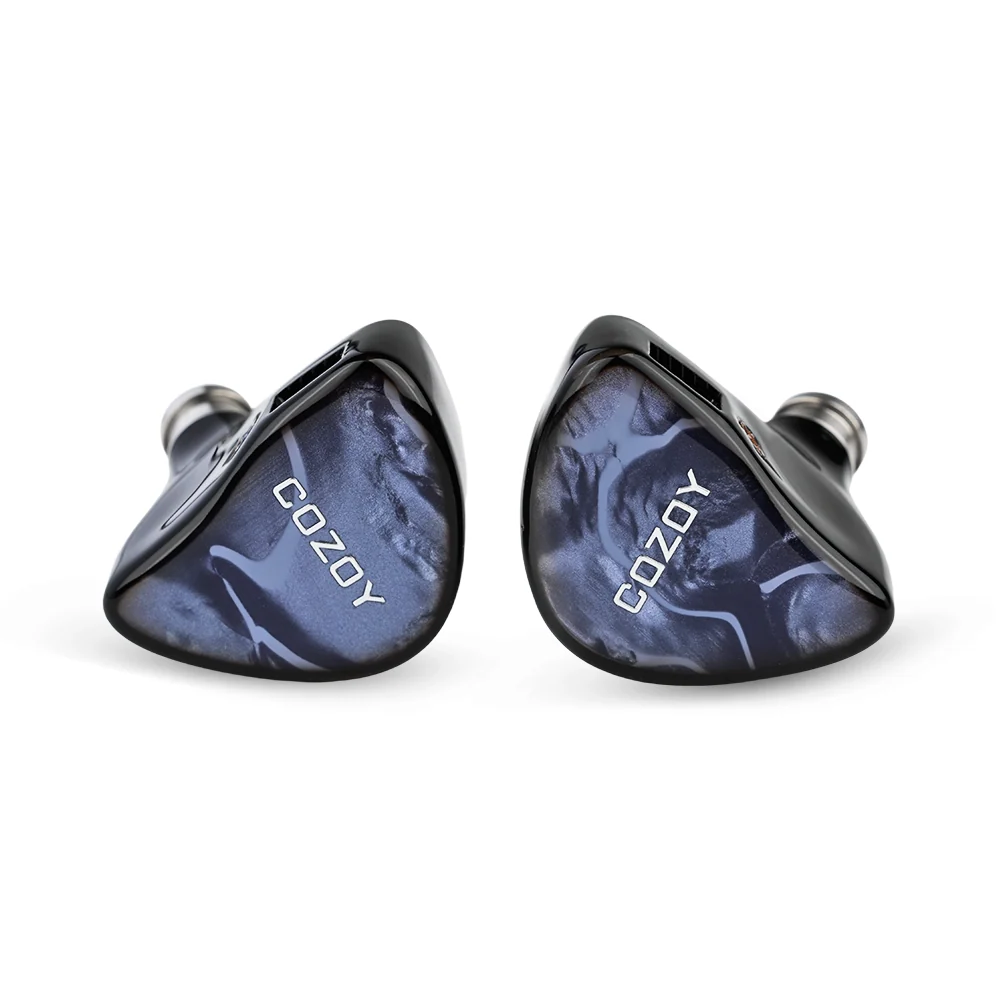
Cozoy D2
Cozoy uses two dynamic drivers here: a 6mm beryllium driver dedicated to bass and a 10mm graphene composite driver covering the rest of the frequency range. The approach is interesting less for the driver count itself than for the result. Bass has definition without dominating the mids, while instruments remain easy to distinguish when the music becomes busy. That organization belies its modest price.
It is not an entirely relaxed or universally flattering presentation. Vocals can become forceful in the upper registers, and a touch of sibilance can interrupt an otherwise clear treble response. I also find the mid bass a little restrained for music that benefits from warmth and physical punch. But there is a real payoff to that balance: quick low frequencies, expressive detail, and a sound that refuses to turn thick or sluggish.
Add small resin shells and a notably generous cable package, and the D2 becomes more than a technical curiosity. It is a compelling affordable option with a clear set of priorities, and its strengths are easy to identify once those priorities match your own.
Unboxing and First Impressions
The unboxing experience is surprisingly polished for something in this price range. The D2 arrives in a sleek box, with the earpieces presented in a foam insert rather than tossed into a basic accessory tray. The presentation feels considered without pretending to be luxurious.
Underneath, the package includes seven pairs of ear tips, a manual, a carrying pouch, and the stock cable with interchangeable plugs. The tip selection is particularly welcome. Fit affects both comfort and bass response, so having several choices in the box is more useful than another decorative extra. The pouch offers basic storage, although I would much rather have a protective case. It feels like the one obvious compromise in an otherwise thoughtfully assembled bundle.
The cable is the highlight. A modular termination system is useful for switching between compatible outputs without replacing the entire cable, and the cable itself feels considerably more substantial than I expect at this price. The emphasis is on genuinely useful accessories rather than unnecessary extras. I would happily trade the pouch for a proper case, but the overall value proposition remains strong.
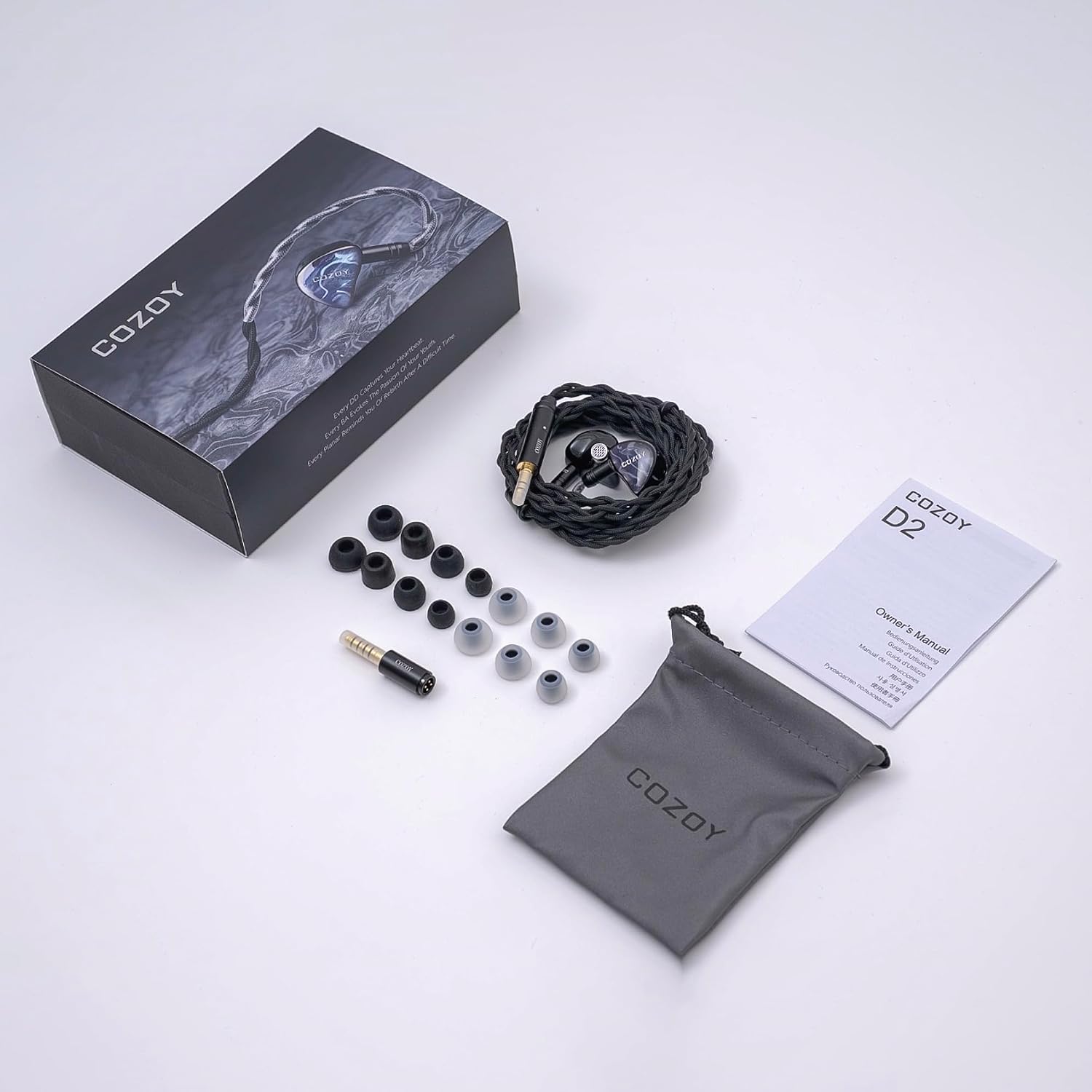
Cozoy D2 Accessories
Build Quality and Design
Cozoy keeps the D2 visually restrained. The shells are compact, made from medical grade resin, and finished with a modern abstract pattern on the faceplates. There is enough visual interest to keep them from looking anonymous, but they are not flashy. I like its tidy, purposeful appearance.
The stainless steel nozzles add a reassuring practical detail. They include a retaining lip to help secure ear tips and a mesh covering at the opening. Practical details matter. The shells themselves are small enough to make comfort a genuine selling point. Combined with suitable stock tips, their shape offers a secure, comfortable fit and useful isolation without demanding a bulky housing.
I am equally positive about the stock cable, with one reservation. Its nylon coated construction gives it an upscale feel, and the modular plug arrangement adds genuine flexibility. It is the sort of included cable that reduces any immediate desire to shop for a replacement. On the other hand, nylon coverings can transmit some rubbing noise when the cable moves. That makes the D2 less appealing as an exercise focused earphone than as a companion for more stationary listening.
The strongest aspect of the design is how little seems wasted. The D2 does not require an extravagant shell to feel well considered, and the cable adds a feature that remains useful beyond the initial purchase. The carrying pouch is underwhelming, and the styling may be too plain for anyone who wants a statement piece. Still, I find the overall combination of compact dimensions, practical nozzle design, and premium feeling accessories unusually convincing for the money.
Sound Quality
The D2 has a clear, quick, detail oriented character. I hear its identity in the way it keeps bass notes distinct, exposes fine information through the midrange, and gives treble an energetic edge. It favors articulation over softness. That brings impressive clarity for the price, but it also means the tuning is less forgiving of prominent vocals or sharp recordings.
Bass
Bass is disciplined rather than oversized. The low end reaches into the sub bass with useful depth, yet the more striking quality is its speed. Individual notes start and stop cleanly, so rapid bass passages remain intelligible instead of becoming a continuous thump. That precision is especially valuable in rhythmically busy music.
The compromise is physical weight. Mid bass has a leaner character, and the D2 does not deliver the sustained rumble or body that a dedicated basshead might want. I would not call it bass light in an absolute sense; it simply allocates more emphasis to definition than force. If kick drums are supposed to hit hard enough to dominate the arrangement, I would choose a fuller sounding alternative. For agile, tightly controlled bass, the D2 makes a persuasive argument.
Midrange
The midrange benefits from that controlled foundation. Instruments and vocals have good separation, and there is little of the muddy thickness that can obscure quieter details on inexpensive earphones. Vocal lines come through with crisp edges, while acoustic instruments retain distinct outlines. Compared with a deliberately warm tuning, the D2 sounds cleaner and more direct.
My hesitation concerns the upper mids. When singers push into stronger or higher notes, that directness can become shouty. Both male and female vocals can acquire an intensity that draws too much attention to their upper harmonics. I prefer a little more restraint here, especially for vocal centered music. The clarity is attractive, but clarity alone does not guarantee a natural or comfortable presentation. Some passages feel more incisive than emotionally inviting.
Treble
Treble extends the D2’s emphasis on detail. There is enough energy to bring out small accents, cymbal textures, and the edges of instruments without making the overall sound dull or veiled. I like the sense of openness, particularly because it complements the controlled bass and keeps the presentation lively.
However, the upper range is not completely smooth. Sibilance can show up on certain vocals, and brighter passages can verge on harshness. It is revealing rather than relentlessly bright. Listeners who are sensitive to treble or who regularly play aggressive recordings should take that seriously. Its crispness is part of the appeal, but it is also the reason I would not select the D2 for consistently laid back listening.
Technical Performance
Technical ability is the D2’s most persuasive strength. Resolution and instrument separation are impressive at its price, and densely layered music retains an orderly presentation rather than collapsing into congestion. Faster passages are particularly satisfying because the bass keeps pace while the mids and treble preserve identifiable details.
The stage is not vast, and I would not confuse its clean separation with an expansive, speaker like presentation. Instead, it creates useful space between musical elements within a relatively intimate picture. That makes the sound engaging and easy to follow. I would also avoid pairing its already incisive character with a setup chosen purely for added warmth if that warmth comes at the expense of definition. The D2 works best when its speed and clarity remain intact.
How It Compares
The most natural comparison is the Cozoy D1. The D1 uses a single dynamic driver and leans toward a warmer, thicker vocal presentation. The D2 moves in a more precise direction. Vocals sound less rounded, high frequency information is easier to pick out, and busy music benefits from stronger separation. I favor the D2 for detail.
There is also a difference in bass character. The D2 offers more apparent sub bass reach than the D1 while keeping mid bass tighter and leaner. Speed improves, but some warmth is lost. The D2 also gives a slightly greater sense of space, although neither approach should be mistaken for an enormous soundstage.
The NF Acous NM25 presents another useful reference point. It occupies a similar territory of articulate, technically focused sound, but offers more treble air. I would not automatically call extra air an advantage: the D2 already has enough upper frequency energy to expose its occasional sharpness. For my preferences, the choice comes down to how much openness matters relative to control.
Overall, the D2 feels like a meaningful refinement of the D1 rather than simply a more aggressive version. I value its clearer separation and more natural vocal thickness, while recognizing that its upper midrange intensity can make the older model’s warmer balance preferable for relaxed listening.
Is It Right for You?
I would recommend the D2 first to listeners who care about definition. If you enjoy picking out bass guitar notes, following fast instrumental lines, or hearing individual layers in a dense arrangement, its strengths align closely with those habits. Rock and progressive music suit that approach particularly well.
It is less suitable for people who measure enjoyment by the size of the bass hit. The sub bass is capable, but the mid bass does not supply the thick warmth or impact expected from a bass heavy tuning. I would also hesitate to recommend it to someone who is especially sensitive to forward vocals, sibilance, or energetic treble. It is not a forgiving tuning.
The practical appeal deserves equal attention. Compact shells and a useful assortment of ear tips make it approachable, while the modular cable gives it flexibility usually associated with more expensive packages. For stationary listening, that combination is especially appealing. For running or other activities involving frequent cable movement, I would prefer something less prone to cable noise. The best buyer is someone willing to accept a little sharpness in exchange for unusually clean, quick sound at a modest price.
Final Verdict
The Cozoy D2 succeeds because it knows what it wants to be. It is a budget dual dynamic IEM built around fast, controlled bass, articulate mids, and an impressively detailed presentation. Its technical ability gives complicated music room to breathe. The compact resin shells and excellent modular cable make the overall package even more appealing.
I would still change two things. A proper protective case would be more useful than the supplied pouch, and a gentler upper midrange tuning would make vocals easier to enjoy across a wider variety of recordings. Occasional sibilance keeps the D2 from becoming an effortless recommendation for treble sensitive listeners.
For me, the D2 is a strong choice when clarity matters more than warmth. It rewards attention to individual musical lines and offers practical value beyond its sound. Choose it for precision, separation, and a refined accessory package; choose something warmer and heavier if comfort in the upper registers and bass impact come first.
Where to Buy
You can find the Cozoy D2 on:
Affiliate Disclaimer: Listen Vibes may earn commissions from qualifying purchases that helps to maintain the website - at no extra cost to you.