When I first sat down with the Crinear Daybreak, I already had high expectations. This model comes from Crinacle’s own brand, following the limited-edition Project Meta that sold out almost instantly. Unlike Meta, the Daybreak is a full production release, easier to find, and priced at around 170 dollars. Over the past weeks I have lived with it, tested it across multiple genres, swapped tips and cables, and compared it to several competitors. Now I want to share my complete experience with this IEM.
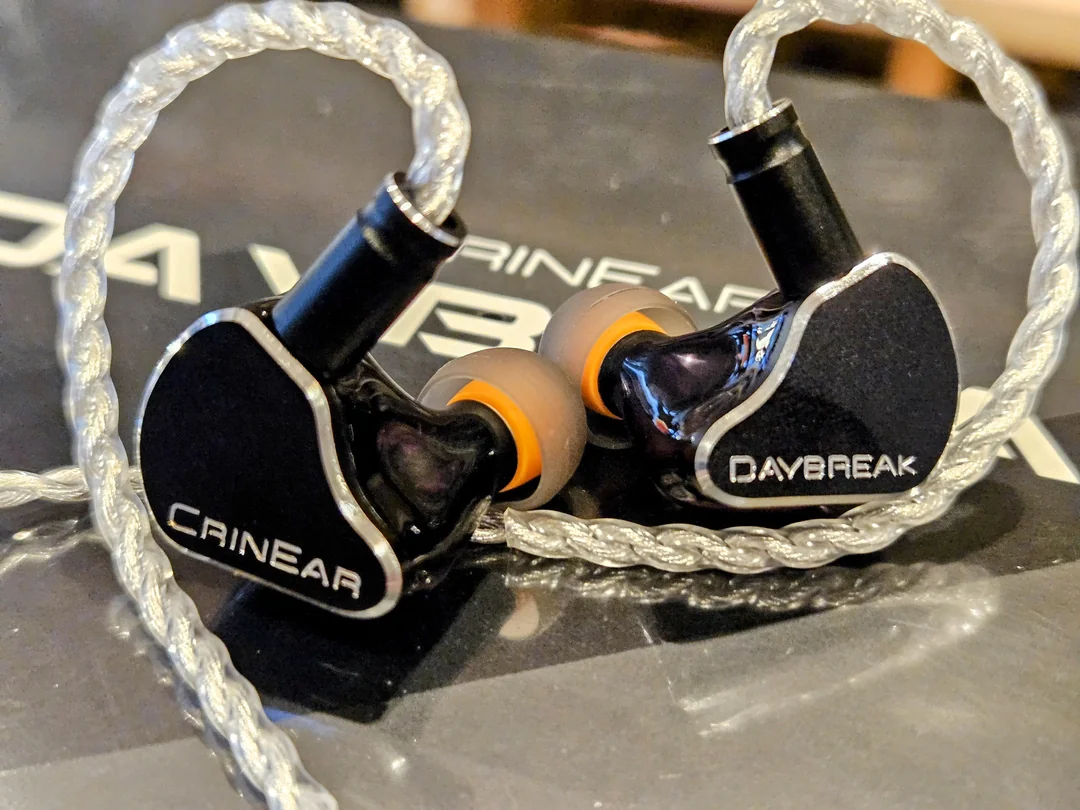
Crinear Daybreak
Unboxing Experience
The packaging of the Daybreak strikes a balance between simplicity and quality. It arrives in a fairly large box for an IEM under 200 dollars, with everything neatly organized. Inside, I found the earpieces set in a foam tray, a modular cable, ear tips, and a leather carry case.
The case is square, magnetic, and lined with a soft interior. It is a bit larger than what I would normally call pocket-friendly, but it feels crush-resistant enough to throw into a backpack without worry. Compared to the waterproof Pelican-style case of the Meta, this one trades ruggedness for a sleeker, more elegant design. Personally, I liked the smaller footprint and the touch of luxury it adds.
For ear tips, the set is modest: silicone tips in different sizes and one pair of foam tips. While functional, I quickly found myself experimenting with aftermarket tips like SpinFit or Divinus Velvet for a better seal and tuning. The included modular cable is a step forward from Meta. It has swappable 3.5 mm and 4.4 mm terminations and a compact right-angled connector. The braid feels decent, though slightly stiff and prone to holding memory, but overall it is a solid inclusion at this price.
Altogether, the unboxing felt professional, complete, and ready to use right away without needing to buy extras.
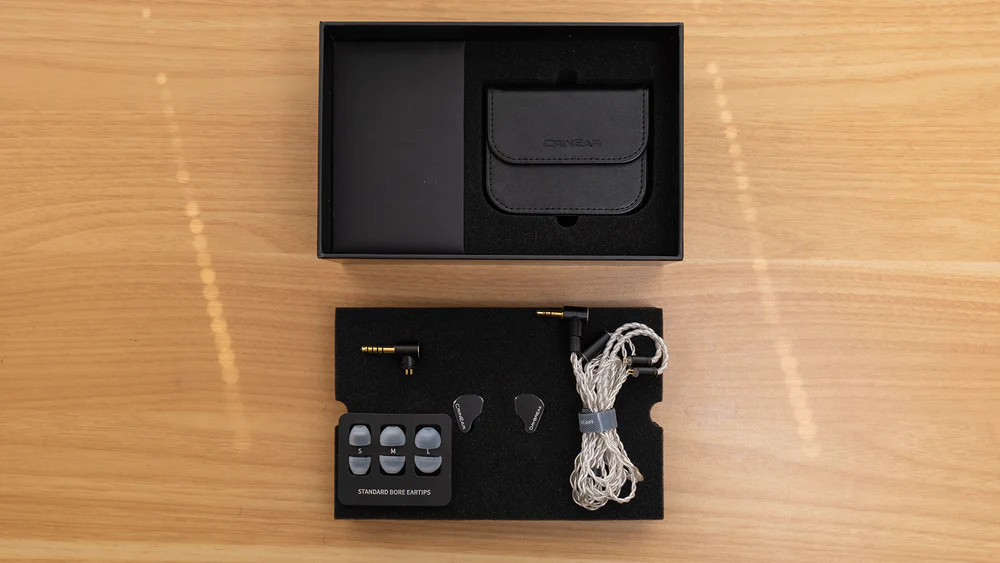
Crinear Daybreak Accessories
Build Quality and Design
The Daybreak is built with resin shells filled for durability, topped with a metal faceplate that carries the Crinear branding. The shells are semi-custom in shape, lightweight at just over five grams each, and finished in a smoky translucent tone. Looking closely, you can catch glimpses of the internal drivers through the shell, which adds a subtle technical aesthetic.
Comfort was a pleasant surprise. The medium-small shell size and ergonomic mold fit securely in my ears. Stability is excellent, and I even managed to fall asleep wearing them without discomfort. However, the nozzle is a bit long at around six millimeters, so tip choice is crucial for deep fit and comfort. With the wrong tips, the fit can feel awkward or the treble a bit edgy, but with the right ones, comfort improves dramatically.
The design language follows the understated philosophy of Crinear: simple, sleek, and professional. Silver chamfering and branding on the faceplates give it just enough visual detail without being flashy. Compared to the copper accents of Meta, Daybreak feels slightly plainer, but I personally like the stealthier look.
Durability seems solid. The resin body feels sturdy, the nozzle has a protective mesh, and there is a venting system to prevent pressure buildup. Overall, I found the build practical and reliable, with enough elegance to feel like a step above entry-level IEMs.
Sound Impressions
This is where the Daybreak really stands out. It is a tri-brid setup, using a dynamic driver for the lows, two balanced armatures for mids, and two micro-planar drivers for treble. The configuration sounds ambitious for the price, and the tuning follows the newer “JM1” target inspired by the B&K 5128 measurement standard.
Bass
The low end is sub-bass focused. There is a satisfying rumble and extension without becoming boomy. Kick drums land with control, bass guitars are well defined, and electronic sub drops feel textured. However, the impact is moderate. It will not wow bassheads who crave slam, but it delivers clean, balanced low frequencies that complement the rest of the spectrum.
Midrange
The midrange is one of Daybreak’s strengths. Vocals sit naturally forward without being shouty. Male voices have warmth and body, while female vocals carry clarity and air. Instruments like guitars and pianos sound realistic, neither thin nor congested. I especially enjoyed rock and acoustic tracks, where the timbre felt lifelike and engaging.
Treble
The highs are handled by the micro-planar tweeters, and they do an excellent job. Cymbals sparkle without harshness, violins retain texture, and electronic treble effects have enough crispness to feel energetic without fatigue. Some listeners find the treble a bit muted at lower volumes, but when listened to at moderate to higher levels, it reveals itself as airy and extended.
Technical Performance
Detail retrieval is solid, though not class-leading at this price. Imaging is accurate, and layering is respectable. The stage is average in width but coherent, with instruments well placed. What impressed me most is the neutrality and low-contrast nature of the tuning. It is not aggressive, but instead smooth, balanced, and easy to listen to for long sessions.
In summary, the Daybreak offers a neutral yet slightly fun tuning: bass for weight, mids for natural vocals, and treble for sparkle without fatigue. It is an excellent all-rounder.
Comparisons with Other IEMs
Naturally, the first comparison is with Project Meta. Meta had a more contrasty, V-shaped presentation with sharper bass and treble. Daybreak, by contrast, is smoother, more relaxed, and less fatiguing. Personally, I prefer Daybreak because it feels more versatile and cohesive.
Against the EPZ P50, which shares similar driver configuration and price, the differences are subtle. P50 leans more toward vocal emphasis, while Daybreak has slightly more sub-bass and overall balance. If vocals are your top priority, P50 might edge ahead, but as an all-rounder, Daybreak is my pick.
The Sliivo SL224 offers better technical performance with extra drivers, but it is also more expensive. Daybreak keeps most of the tonality at a more approachable cost.
Compared to Ziigaat Odyssey, the Daybreak loses in slam and low-end texture. Odyssey is livelier for pop, hip-hop, or EDM, but Daybreak wins on balance and neutrality.
Finally, sets like Letshuoer Cadenza 4 or Truthear Zero Red might appeal more strictly to vocal lovers, but they lack the versatility of Daybreak across genres.
Overall, Daybreak consistently positions itself as the most balanced option. It may not dominate in any single category, but it never feels weak either.
Who Should Consider the Daybreak?
I would recommend the Crinear Daybreak to listeners who want a balanced, non-fatiguing all-rounder. It is ideal if you:
- Enjoy a wide range of genres and want one set that works with everything.
- Prefer natural vocals and smooth treble over exaggerated bass or sharp highs.
- Value comfort and lightweight shells for long listening sessions.
- Are looking for a neutral tuning aligned with modern measurement standards like the JM1 target.
It may not satisfy bassheads chasing slam or detail chasers looking for maximum resolution. Nor is it the most visually striking IEM. But for most listeners who want a refined, versatile daily driver under 200 dollars, the Daybreak is an excellent choice.
Conclusion - My Final Verdict
After spending considerable time with the Crinear Daybreak, I can confidently say it is one of the most complete IEMs in its price bracket. From the thoughtful unboxing to the sturdy yet comfortable build, and most importantly, its smooth, balanced sound, it delivers on all fronts.
It does not try to be extreme. The bass is clean but not thunderous, the mids are natural but not overly colored, and the treble sparkles without being harsh. This restraint makes it easy to live with and enjoy day after day. Compared to its predecessor Meta, the Daybreak feels more mature, more refined, and far easier to recommend.
At 170 dollars, it offers fantastic value for anyone seeking a neutral all-rounder with just enough fun to keep things engaging. For me, it has become a reliable companion that I reach for when I want to enjoy music without overthinking it. The Crinear Daybreak proves that sometimes balance really is the most exciting quality of all.
Where to Buy
You can find the Crinear Daybreak on:
Affiliate Disclaimer: Listen Vibes may earn commissions from qualifying purchases that helps to maintain the website - at no extra cost to you.